

Firearms Training and Decision-Making: What 359 Slovenian Police Officers Reported
A national survey of 359 Slovenian police officers examined legal knowledge, perceived operational readiness, and views of firearms training.
Read article →ABA Research archive
A national survey of 359 Slovenian police officers examined legal knowledge, perceived operational readiness, and views of firearms training.
Read article →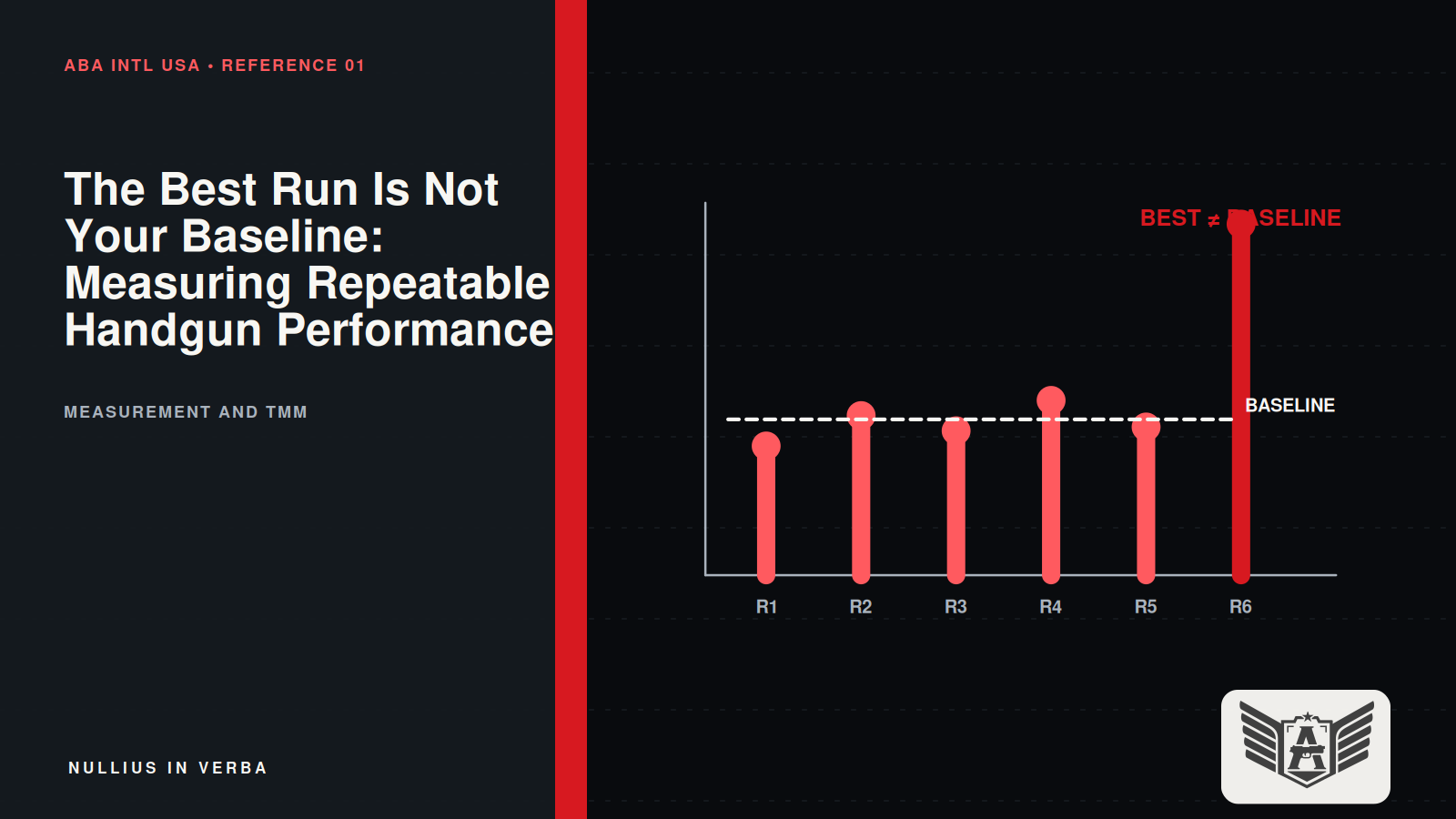
A personal record describes an event. A baseline describes a performer. Confusing the two produces flattering numbers, weak diagnoses, and training decisions that cannot survive retesting.
Read article →
A draw time has little meaning without a distribution and a validity rule. Three compact metrics can turn five repetitions into an honest diagnostic record.
Read article →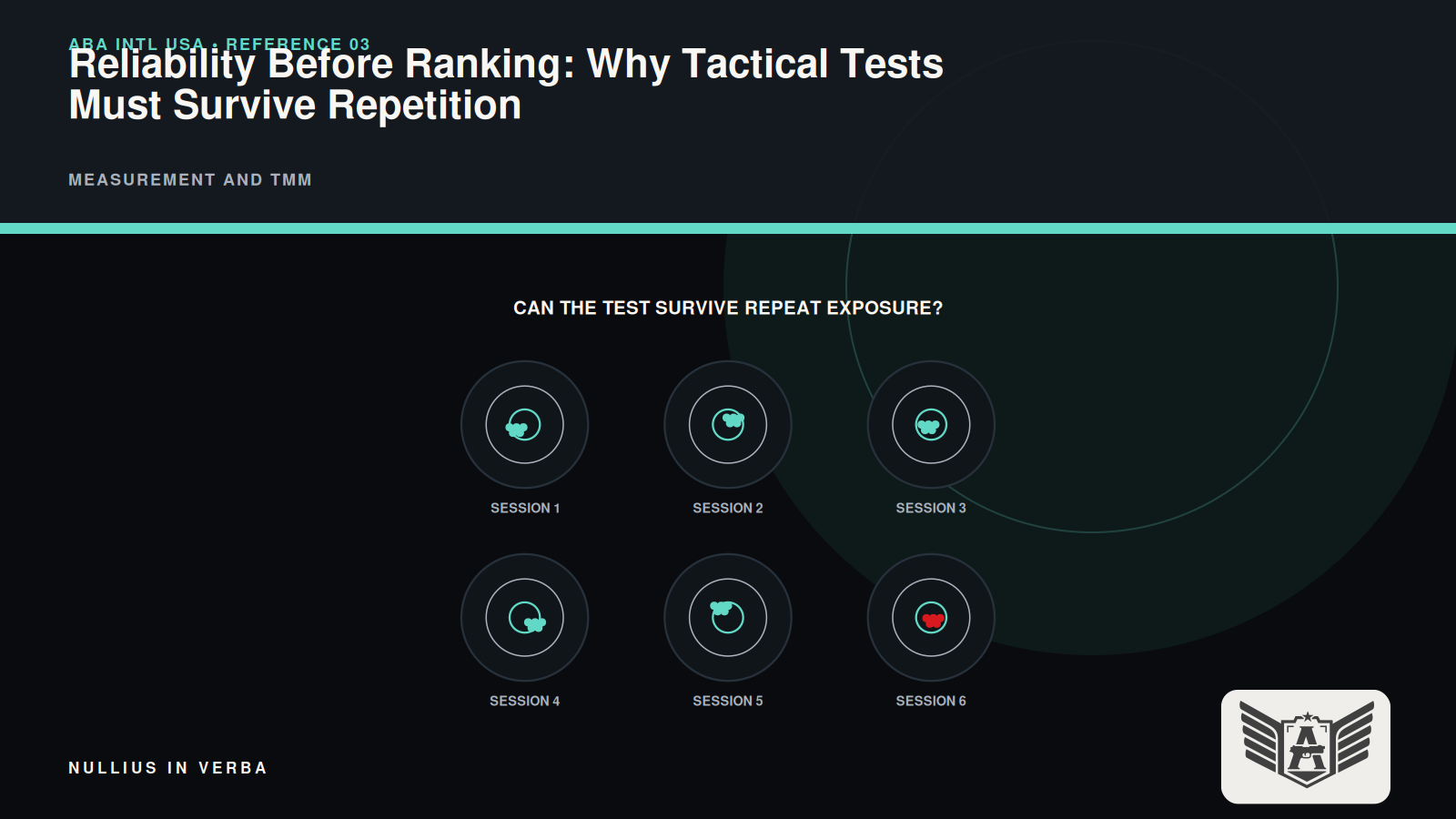
A test cannot support rankings, standards, or training claims until its scores remain interpretable across repetitions, evaluators, and testing days.
Read article →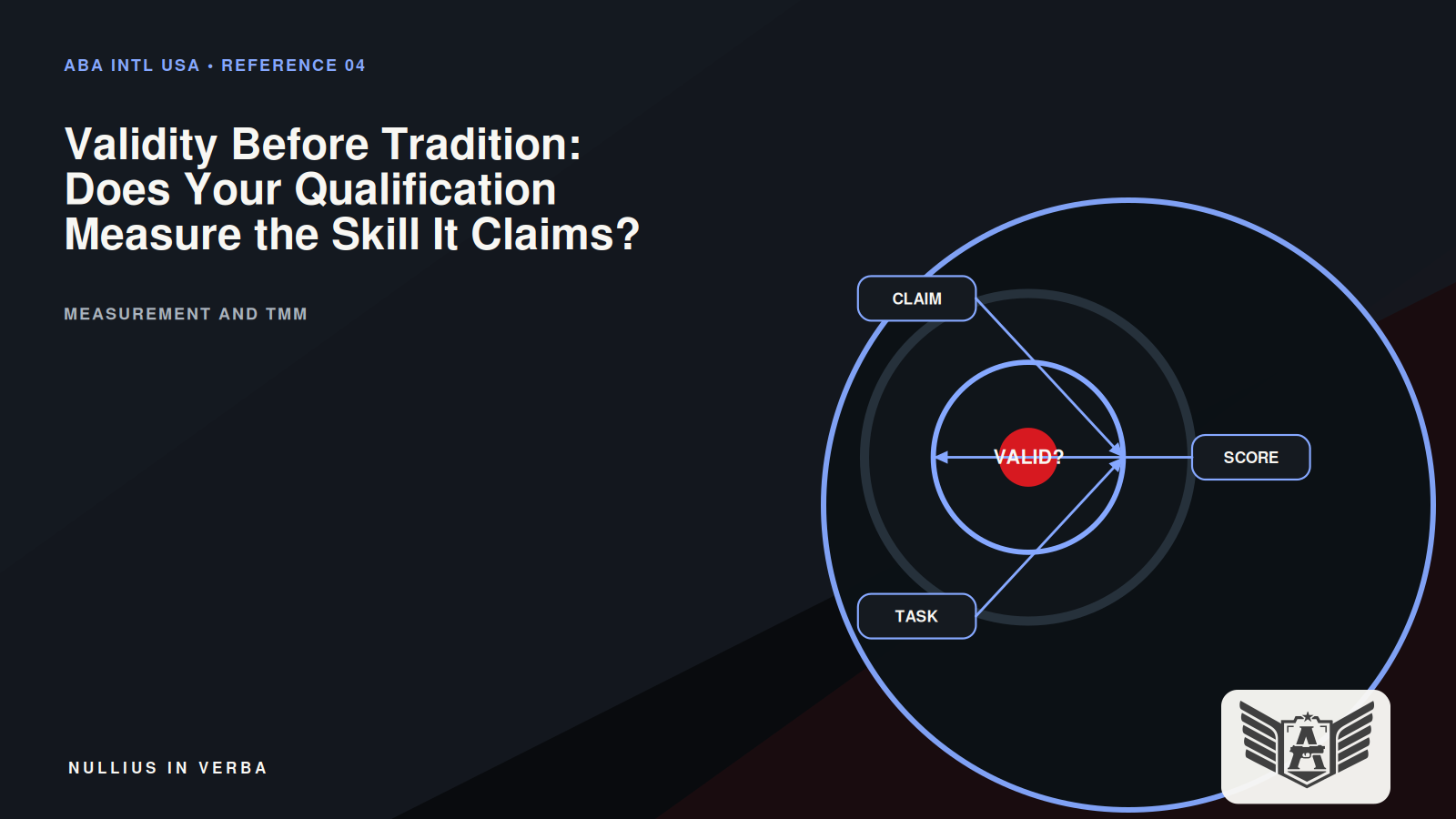
A course of fire can be reliable, demanding, and professionally administered while still measuring the wrong construct. Validity begins with the claim, not the target.
Read article →
TMM is not a slogan or a three-part checklist. It is a feedback system that connects an observable solution, a defensible measurement, and an intervention chosen for the actual constraint.
Read article →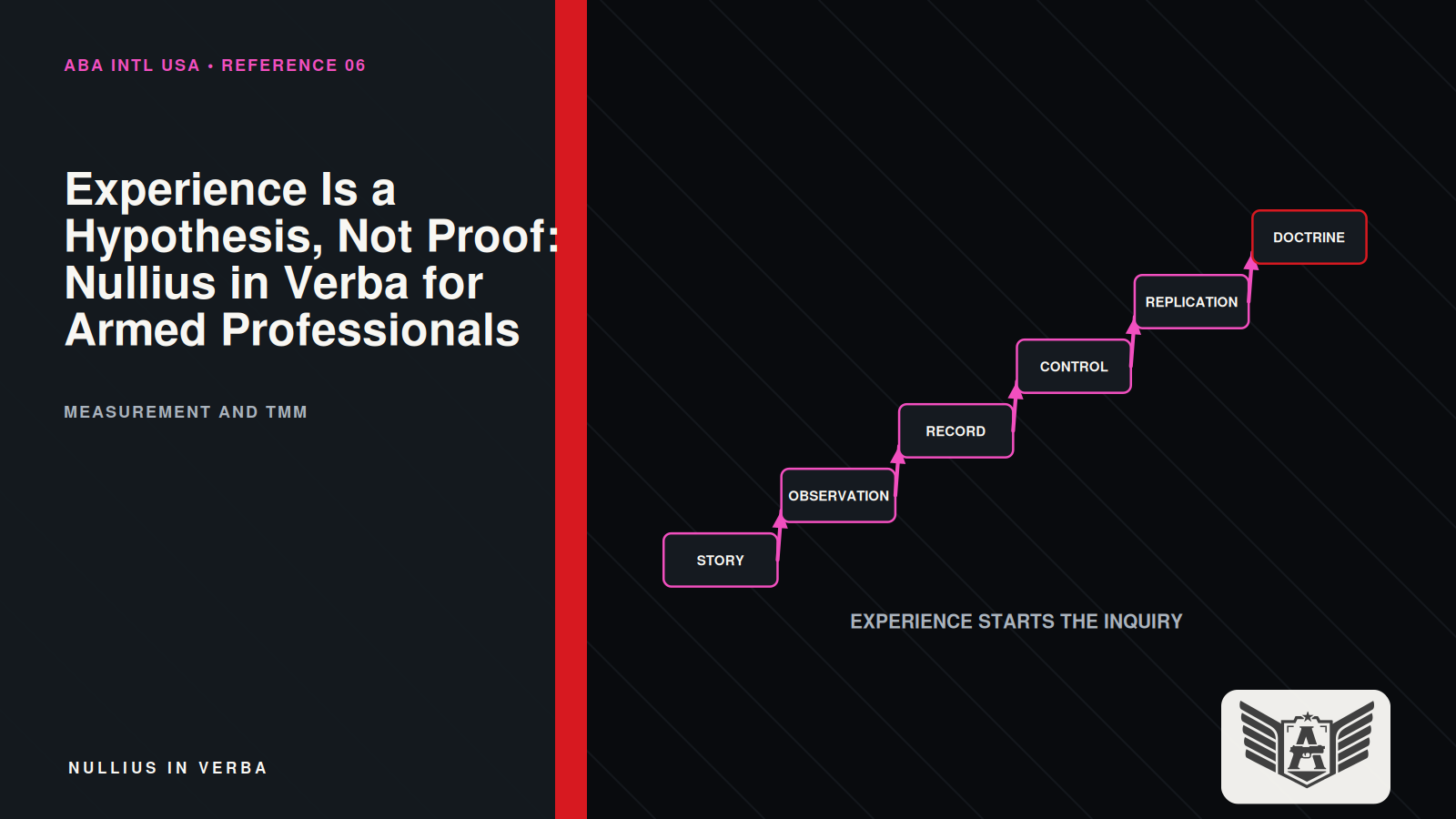
Operational experience is indispensable for identifying real problems. It becomes dangerous when memory, status, and survival are treated as proof that a method caused the outcome.
Read article →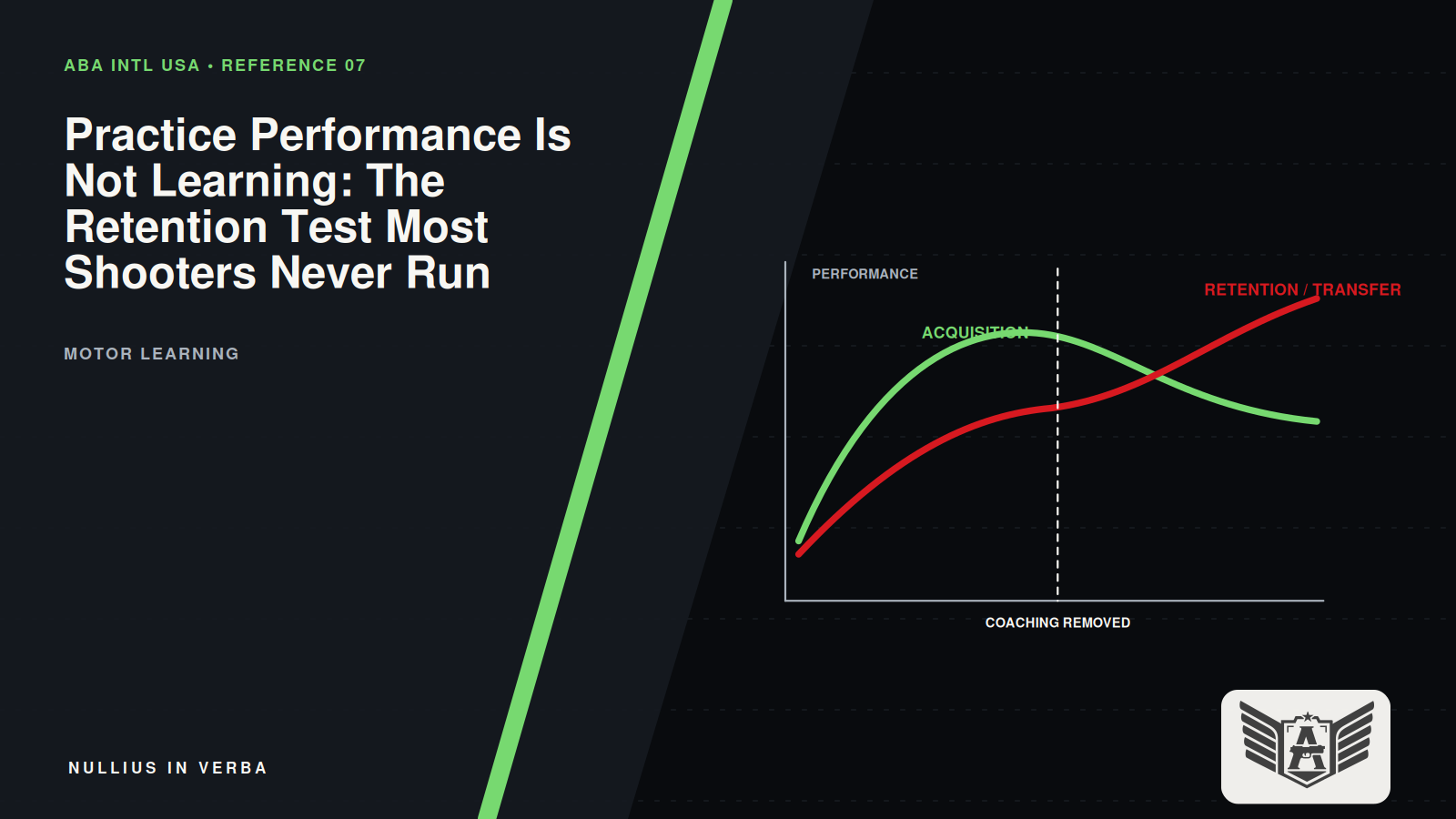
A smooth training session can produce no durable change, while a difficult session can create superior retention. Learning is what remains after practice support is removed.
Read article →
In ABA Intl’s methodology, metrics are not optional — they are a structural pillar. As one of the three elements of the TMM Triad […]
Read article →