
In the United States, the armed citizen is not an abstract political figure. He is a statistically visible, culturally significant, and legally complex part of American life. Depending on the survey, roughly one-third of American adults personally own a firearm, while a larger share live in households where at least one firearm is present. Among those owners, personal protection has become the dominant stated reason for ownership, surpassing hunting, sport shooting, collecting, or occupational use by a substantial margin. The modern American gun owner is therefore not merely a recreational shooter or rural traditionalist; he is often a private citizen who has made a deliberate decision to assume some degree of personal responsibility for his own safety and the safety of those under his care.
That decision deserves to be treated seriously. It should not be romanticized, trivialized, or reduced to internet theater. A firearm is not a personality accessory, a symbolic object, or a magic instrument that converts anxiety into competence. It is a tool of grave consequence, and the mere act of carrying one does not create judgment, skill, emotional control, legal understanding, or technical reliability. In fact, the greater the consequence of a tool, the less acceptable it becomes to confuse ownership with preparation. A person may own a piano without being a musician, possess surgical instruments without being a surgeon, or carry expensive golf clubs without being able to play a competent round. The same logic applies with even greater force to firearms, because the cost of incompetence is not embarrassment. It may be irreversible harm.
The statistical case for armed self-defense is often argued in crude terms, as though the only relevant question were whether firearms are used defensively a certain number of times per year. That debate is important, but it is also more complicated than slogans permit. Estimates of defensive gun use vary widely depending on methodology, survey design, memory effects, definitions, and whether incidents reported by respondents can be independently verified. National Crime Victimization Survey data have produced relatively conservative estimates in the tens of thousands of defensive firearm incidents per year, while other survey-based research has reported much higher numbers. The responsible conclusion is neither that defensive gun use is a myth nor that every gun owner is secretly saving the republic three times a week before breakfast. The responsible conclusion is that defensive firearm use does occur, that the exact frequency remains contested, and that when lawful force becomes relevant, the quality of the citizen’s preparation matters far more than the confidence with which he talks about preparation.
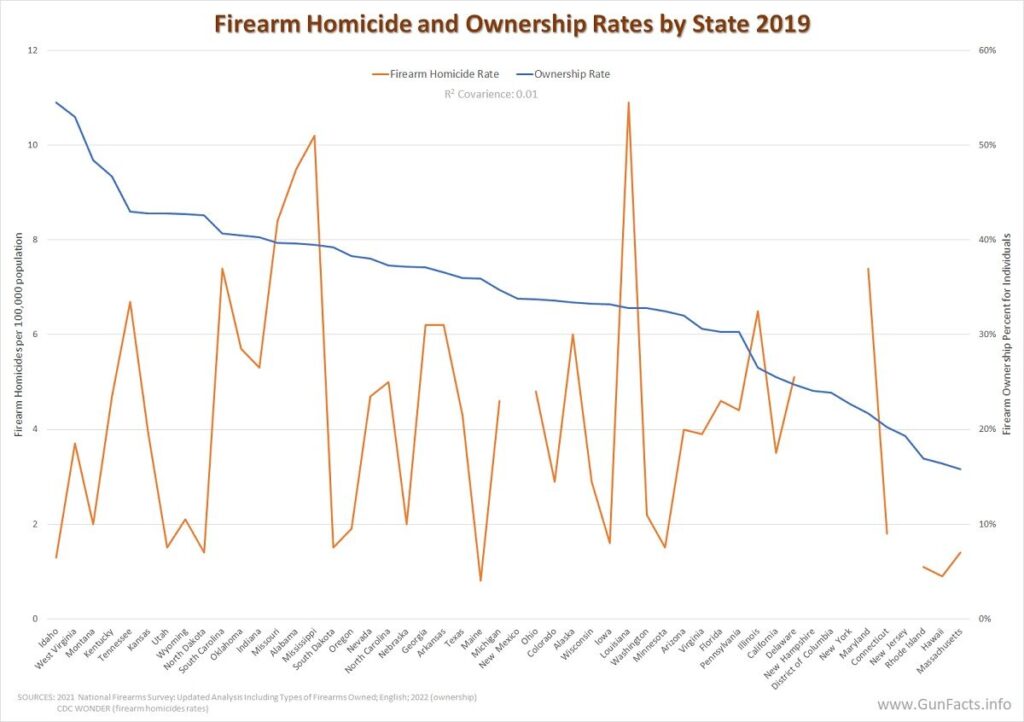
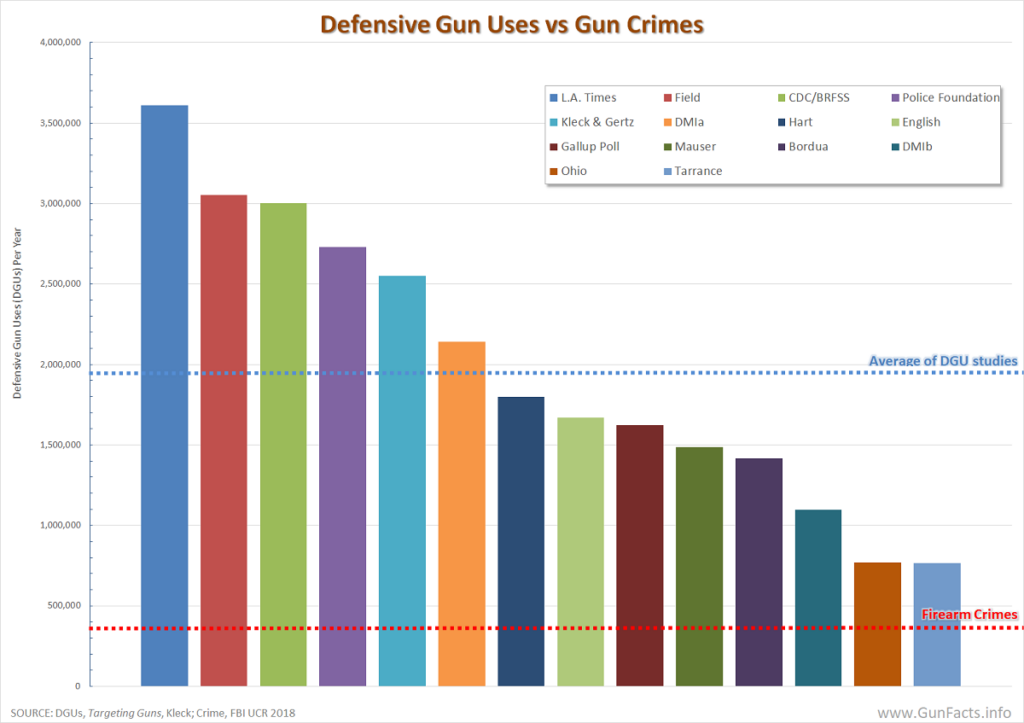
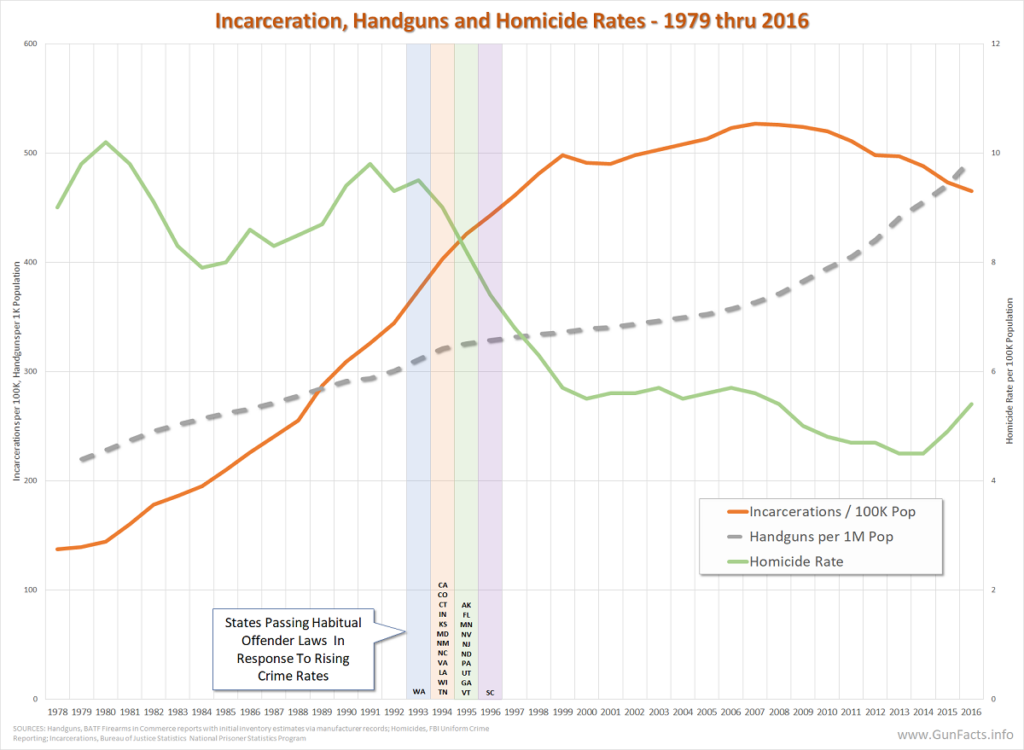
This is precisely where the argument for carry should be stated without apology. If the available statistical literature on defensive gun use, civilian firearm ownership, and concealed carry tells us anything, it is that armed, law-abiding citizens are not merely passive observers waiting for the state to arrive after violence has already begun. The “more guns, less crime” thesis is ultimately grounded in a simple practical reality: violent offenders prefer vulnerable victims, and the possibility of armed resistance changes the cost-benefit calculation of predatory behavior. Even if a particular citizen may go his entire life without drawing a firearm in defense of himself or others—and one should sincerely hope that he does—the social and individual value of lawful carry exists in that narrow but decisive space between the unlikely and the catastrophic. Fire extinguishers, medical kits, seat belts, insurance policies, and evacuation plans are not used every day, yet serious people understand their value before the emergency arrives. The same logic applies to responsible armed citizenship. It is better to carry and never need the gun than to need it when no lawful means of effective defense remains available; but that argument is complete only when joined to training, judgment, and measurable competence, because the armed citizen should not merely be equipped to resist violence, but trained to do so responsibly, legally, and with the highest possible regard for innocent life.
The growth of American gun ownership in recent years intensifies this problem. Survey research during and after the COVID-19 period found millions of first-time gun owners entering the armed-citizen population, many of them from households that previously did not contain firearms. That matters because first-time ownership often arrives faster than culture, mentorship, training infrastructure, or sober technical standards. A person may buy a firearm in an afternoon, but he cannot buy judgment, motor control, perceptual skill, safe habits, decision-making under stress, or the emotional discipline required to avoid turning a solvable problem into a life-altering one. The gap between acquisition and capability is where serious firearms education must live.
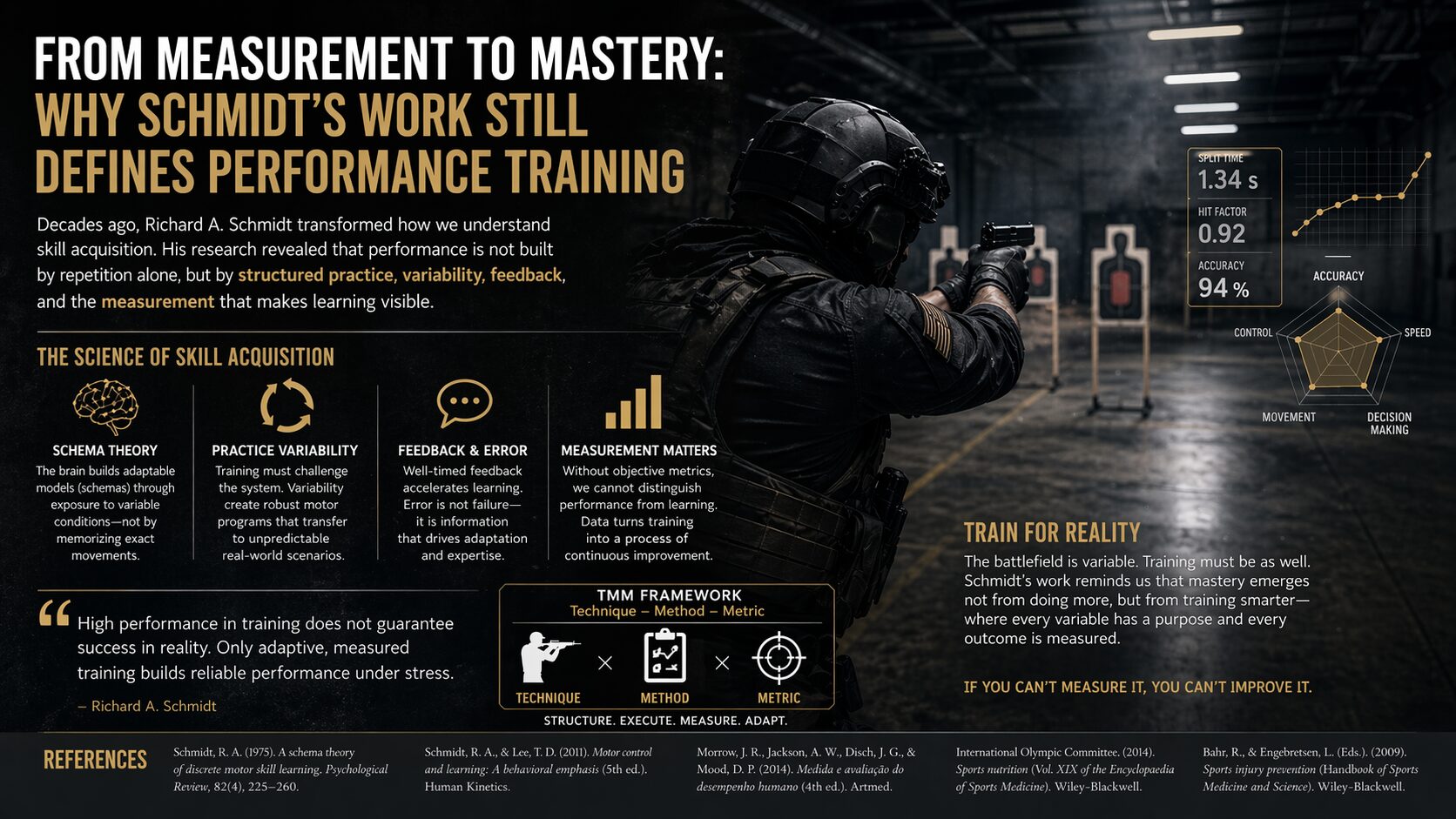
Experience is not training. This distinction is uncomfortable because many people use years of ownership as a substitute for evidence of competence. A person may say, “I have carried for twenty years,” as though duration alone were a performance credential. It is not. Years of exposure may produce familiarity, but familiarity is not the same as skill acquisition. A driver who has operated a vehicle badly for decades is not a professional driver; he is an experienced bad driver. A gun owner who has repeated the same unsupervised habits for years may not be trained; he may simply be well-rehearsed in his limitations. Expertise research has been clear on this issue for decades: improvement is not produced by time alone, but by structured practice, clear objectives, feedback, correction, and progressive adaptation. Practice matters, but only when it is organized in a way that changes the performer.
Knowledge is not skill either. Many armed citizens consume impressive quantities of information. They watch videos, read articles, compare equipment, follow instructors, discuss tactics, memorize arguments, and accumulate vocabulary. Some become fluent in the language of training without developing the embodied capacity that training is supposed to produce. They know what should happen, but knowing is not doing. The nervous system does not reorganize itself because a person agrees with an idea. Skill requires repeated interaction between intention, execution, error, feedback, and correction. This is why the gun world contains many people who can explain performance better than they can demonstrate it. Their information is real; their skill is not yet equally real.
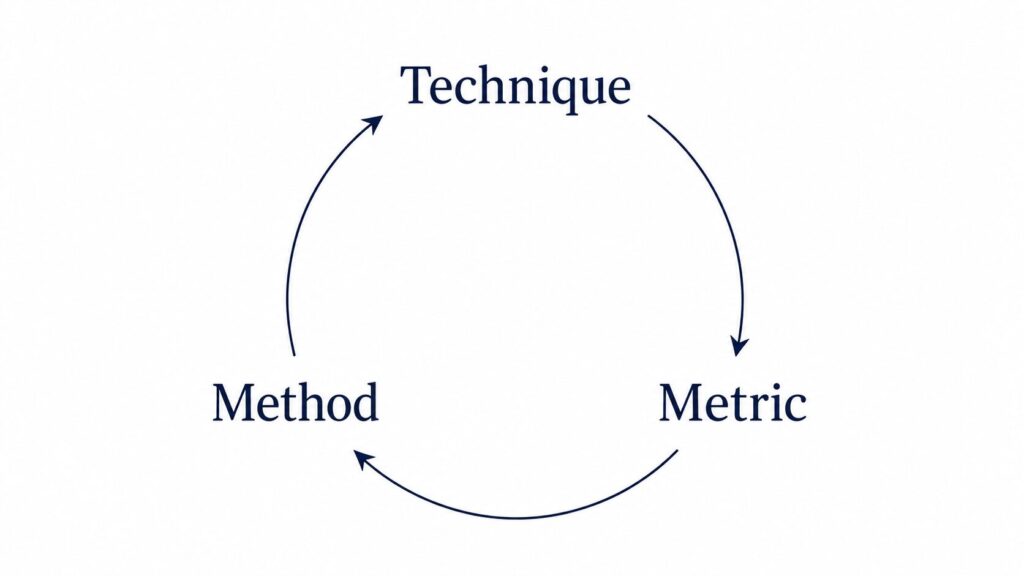
Firearms training, properly understood, is not the memorization of techniques. It is the disciplined construction of reliable behavior. Technique matters because the body needs mechanically coherent solutions. Method matters because isolated techniques do not automatically become organized capability. Metrics matter because without measurement the shooter is left with impressions, and impressions are notoriously generous to the ego. The ABA Intl framework can be stated plainly: Technique, Method, and Metrics. Technique answers the question of what the shooter is attempting to do. Method organizes how that ability will be developed over time. Metrics determine whether the work is producing measurable improvement or merely producing the sensation of effort.
This triad is necessary because armed competence has several dimensions. There is the technical dimension: safe handling, accuracy, consistency, efficiency, and repeatability. There is the cognitive dimension: recognizing relevant information, avoiding premature conclusions, understanding context, and making lawful decisions under uncertainty. There is the emotional dimension: managing fear, anger, ego, pride, panic, and the dangerous human desire to be proven right. There is also the ethical dimension: understanding that the best defensive outcome is often not the most dramatic one, but the one in which danger is avoided, escalation is prevented, innocent people are protected, and force is not used unless it is truly necessary and legally justified. A serious course does not exist merely to make the student faster. It exists to make the student more competent, more accountable, and less likely to confuse speed with judgment.
Modern firearms culture often makes this harder than it should be. The internet rewards theatrical certainty, visually aggressive content, equipment obsession, and simplistic slogans. It encourages people to build an identity around being armed before they have built a disciplined training process around being responsible. The result is an armed citizen who may look prepared in photographs while lacking a tested understanding of his own performance. He may own quality equipment, know the names of respected instructors, understand online arguments about calibers and holsters, and still lack the ability to demonstrate consistent performance under even modest constraints. This is not a moral failure, but it is a training failure. The remedy is not shame. The remedy is structure.
A serious course introduces structure. It places the student in front of standards that do not care about self-image. It reveals the difference between what the student believes he can do and what he can actually reproduce. It teaches the student to recognize error without dramatizing it, correct behavior without personalizing the correction, and evaluate progress without relying on mood. Good instruction does not merely add information; it changes the student’s relationship to performance. It replaces vague confidence with tested competence. It replaces random repetition with deliberate practice. It replaces the illusion of preparedness with a process that can be measured, reviewed, and improved.
The need for training becomes even more obvious when one considers that defensive situations, by their nature, are unlikely to resemble comfortable range conditions. Stress can narrow attention, distort perception, degrade fine motor control, accelerate poor decisions, and expose habits that were invisible during casual practice. Under pressure, the shooter does not rise to the level of his political opinions, equipment choices, or online vocabulary. He reveals the depth and quality of his preparation. If the fundamentals require excessive conscious control in a calm environment, there is little reason to assume they will remain available under higher cognitive load. The purpose of training is not to eliminate thought, but to prevent the shooter from wasting conscious attention on elements that should already be organized, safe, and reliable.
This does not mean every armed citizen must become an elite performer, nor does it mean responsible people should live in a constant state of threat anticipation. On the contrary, the more serious the training, the less theatrical the mindset tends to become. Competent people usually become less impressed with fantasy because training exposes complexity. They understand that carrying a firearm is not a declaration of dominance. It is an acceptance of responsibility. It requires humility because the consequences are severe. It requires restraint because avoidance is usually superior to confrontation. It requires technical competence because good intentions do not guarantee safe outcomes. It requires continuing education because decay, complacency, and overconfidence are permanent adversaries.
The practical implication is simple but demanding: if an adult chooses to carry a firearm, he should also choose to train beyond minimum legal requirements. Legal permission is not the same thing as practical capability. A permit, where required, establishes a legal threshold; it does not establish mastery. The absence of a permit requirement in a constitutional carry state does not remove the burden of competence; it merely shifts more of that burden onto the individual. In a culture that values liberty, this distinction matters. Freedom does not become stronger when people treat serious tools casually. It becomes stronger when citizens voluntarily hold themselves to standards higher than the minimum demanded by the state.
The goal is not to sell fantasy, decorate ego, or pretend that armed citizenship is a costume. The goal is to build competence through a structured relationship between Technique, Method, and Metrics. Whether the student trains through online education, video analysis, private instruction, or in-person courses, the principle remains the same: responsible performance must be developed, measured, corrected, and maintained. A firearm may be purchased, carried, stored, displayed, or discussed, but competence must be built.
Carrying a gun does not make you trained. It makes the consequences of being untrained more serious. If the day never comes, thank God. If it does, the question will not be what you owned, what you believed, or how long you had been carrying. The question will be what you had actually become capable of doing.
References
Bureau of Alcohol, Tobacco, Firearms and Explosives. (2024). Firearms commerce in the United States: Statistical update 2024. U.S. Department of Justice.
Ericsson, K. A., Krampe, R. T., & Tesch-Römer, C. (1993). The role of deliberate practice in the acquisition of expert performance. Psychological Review, 100(3), 363–406.
Fitts, P. M., & Posner, M. I. (1967). Human performance. Brooks/Cole.
Gun Facts. (n.d.). Gun Facts: Gun control policy information. Retrieved June 16, 2026, from https://www.gunfacts.info/
Macnamara, B. N., Hambrick, D. Z., & Oswald, F. L. (2014). Deliberate practice and performance in music, games, sports, education, and professions: A meta-analysis. Psychological Science, 25(8), 1608–1618.
McDowall, D., Loftin, C., & Wiersema, B. (2024). Levels and changes in defensive firearm use by U.S. crime victims, 1987–2021. American Journal of Public Health, 114(10), 1083–1089.
Miller, M., Zhang, W., & Azrael, D. (2022). Firearm purchasing during the COVID-19 pandemic: Results from the 2021 National Firearms Survey. Annals of Internal Medicine, 175(2), 219–225.
National Research Council. (2005). Firearms and violence: A critical review. National Academies Press.
Pew Research Center. (2023). For most U.S. gun owners, protection is the main reason they own a gun.
Pew Research Center. (2024). Key facts about Americans and guns.
RAND Corporation. (2024). The science of gun policy: Defensive gun use.
Schmidt, R. A., & Lee, T. D. (2019). Motor learning and performance: From principles to application. Human Kinetics.