
The study of human performance is not merely an academic endeavor; it is a foundational pillar for any discipline that operates under time pressure, uncertainty, and consequence. In the context of armed and unarmed combat, where milliseconds determine outcomes, the framework established by Fitts and Posner (1967) remains one of the most relevant and underutilized models for understanding how individuals acquire, refine, and execute complex motor skills under stress.
At its core, Human Performance presents a structured view of skill acquisition, perceptual-motor processing, and the inherent limitations of human cognition and reaction. These principles, when properly interpreted, challenge many conventional training methodologies and provide a clear direction for building systems that are not only technically sound but operationally viable.
One of the most critical insights from Fitts and Posner is that human performance is constrained by sequential processing. Perception, decision-making, and action do not occur simultaneously but unfold in a temporal chain. Even in simple reaction tasks, the individual must detect a stimulus, interpret its meaning, select a response, and initiate motor output. This sequence introduces unavoidable latency, which becomes increasingly problematic as environmental complexity rises.
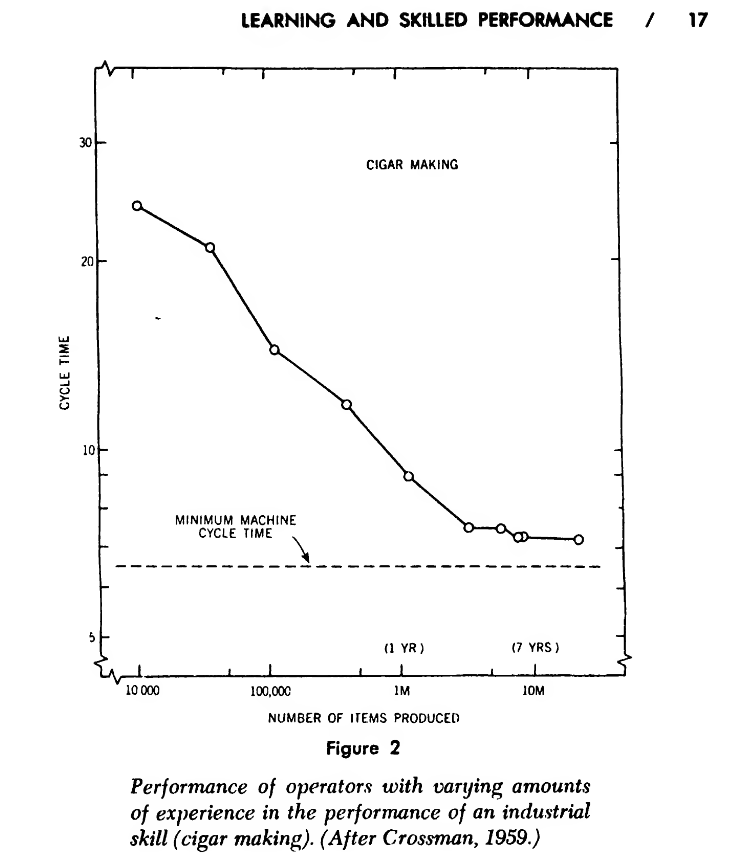
Empirical findings discussed in the book demonstrate that reaction time is not a fixed value but a variable influenced by uncertainty, stimulus intensity, and cognitive load. When uncertainty is introduced—such as not knowing when or where a stimulus will occur—reaction times increase significantly. Conversely, when timing becomes predictable, individuals can artificially reduce reaction time by anticipating the event, effectively bypassing the reactive process. This distinction is critical: true reaction is always slower than anticipation, and in real-world combat, anticipation is rarely reliable.
This leads to a fundamental asymmetry between attacker and defender. The attacker operates on a pre-initiated motor program, while the defender must process incoming information before responding. Fitts and Posner’s work reinforces that this asymmetry is not a matter of training deficiency but a structural characteristic of human cognition. The defender is inherently operating at a temporal disadvantage.
Another key concept is the speed–accuracy tradeoff, extensively explored in the book. As individuals attempt to increase speed, error rates rise; as they prioritize accuracy, response time increases. Optimal performance is achieved not at maximal speed or maximal precision, but at a balance point where information transmission is maximized. Experimental data suggest that this balance often occurs at a non-zero error rate, meaning that a certain level of imperfection is not only inevitable but functionally optimal
In combat training, this has direct implications. Systems that demand perfect accuracy under extreme time constraints are fundamentally misaligned with human capability. Instead, training should aim to operate within the optimal performance envelope, where speed and accuracy are balanced according to the demands of the scenario. This reinforces the importance of defining acceptable performance thresholds rather than idealized outcomes.
Fitts and Posner also introduce a hierarchical model of skill learning, which can be divided into three primary stages: cognitive, associative, and autonomous. In the cognitive stage, the individual is consciously processing each component of the task, resulting in slow and error-prone performance. In the associative stage, errors decrease and efficiency improves as patterns are recognized. Finally, in the autonomous stage, the skill becomes largely automatic, requiring minimal conscious oversight.
For combat applications, this progression is not optional—it is essential. Under stress, cognitive resources are degraded, and the ability to consciously process complex sequences is severely limited. Actions that have not reached the autonomous stage are unlikely to be executed reliably in high-pressure environments. This aligns with the broader principle that under stress, individuals default to their level of training, not their level of understanding.
The book further explores the role of temporal resolution and perceptual processing, demonstrating that humans can detect extremely small differences in timing under controlled conditions, but performance deteriorates rapidly as task complexity increases. Sensory systems are capable of high precision, but only within constrained parameters. In dynamic environments with multiple competing stimuli, attentional resources become a limiting factor, leading to delayed or missed responses.
This is particularly relevant in environments where multiple threats, movement, and environmental variables compete for attention. The notion that an individual can maintain perfect situational awareness while executing complex motor tasks is inconsistent with the limitations described in human performance research. Instead, training must account for attentional bottlenecks and prioritize simplicity, clarity, and efficiency in both perception and action.
Another critical element discussed by Fitts and Posner is the concept of information processing capacity. Humans operate as limited-capacity processors, meaning that as task demands increase, performance in individual components may degrade. This has direct implications for multitasking in combat scenarios. Attempting to process excessive information or execute overly complex sequences can lead to performance collapse, not gradual degradation.
From a training perspective, this reinforces the necessity of reducing cognitive load. Techniques must be streamlined, decision trees simplified, and responses standardized to the greatest extent possible. Complexity does not scale under stress; it fails.
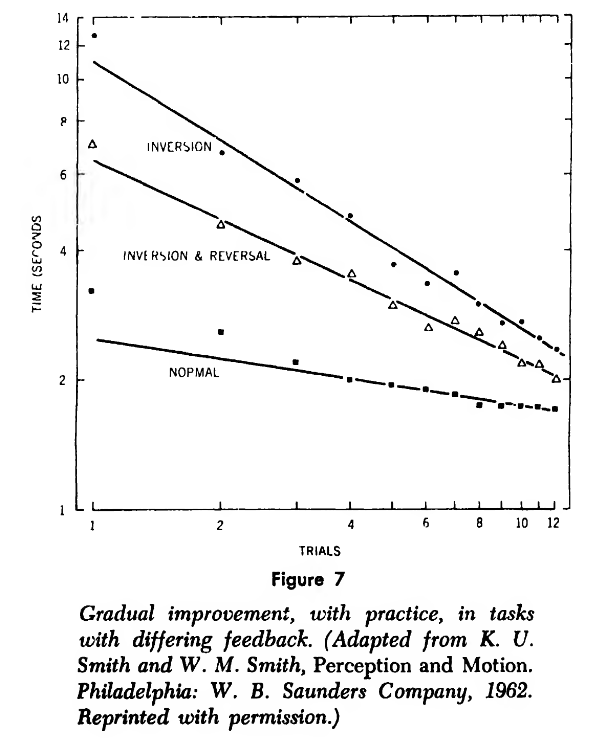
Finally, the book emphasizes the importance of feedback in skill acquisition. Immediate and accurate feedback accelerates learning, allowing individuals to adjust performance and refine motor patterns. However, as skills become more advanced, intrinsic feedback—derived from the individual’s own sensory systems—becomes increasingly important. This transition is critical for developing autonomy and adaptability.
In practical terms, this means that training systems must evolve from externally guided instruction to internally regulated performance. The goal is not merely to perform correctly under supervision, but to maintain performance consistency in the absence of guidance, under conditions of uncertainty and stress.
In conclusion, the framework provided by Fitts and Posner offers a rigorous and scientifically grounded lens through which combat training can be evaluated and improved. It challenges the assumption that more complexity leads to better performance and instead highlights the importance of efficiency, automation, and alignment with human limitations.
Combat is not fought in ideal conditions, and performance is not executed in a vacuum. It is constrained by biology, shaped by training, and ultimately defined by time. Understanding these constraints is not a theoretical exercise—it is a prerequisite for building systems that work when it matters most.
Fitts, P. M., & Posner, M. I. (1967). Human performance. Brooks/Cole.