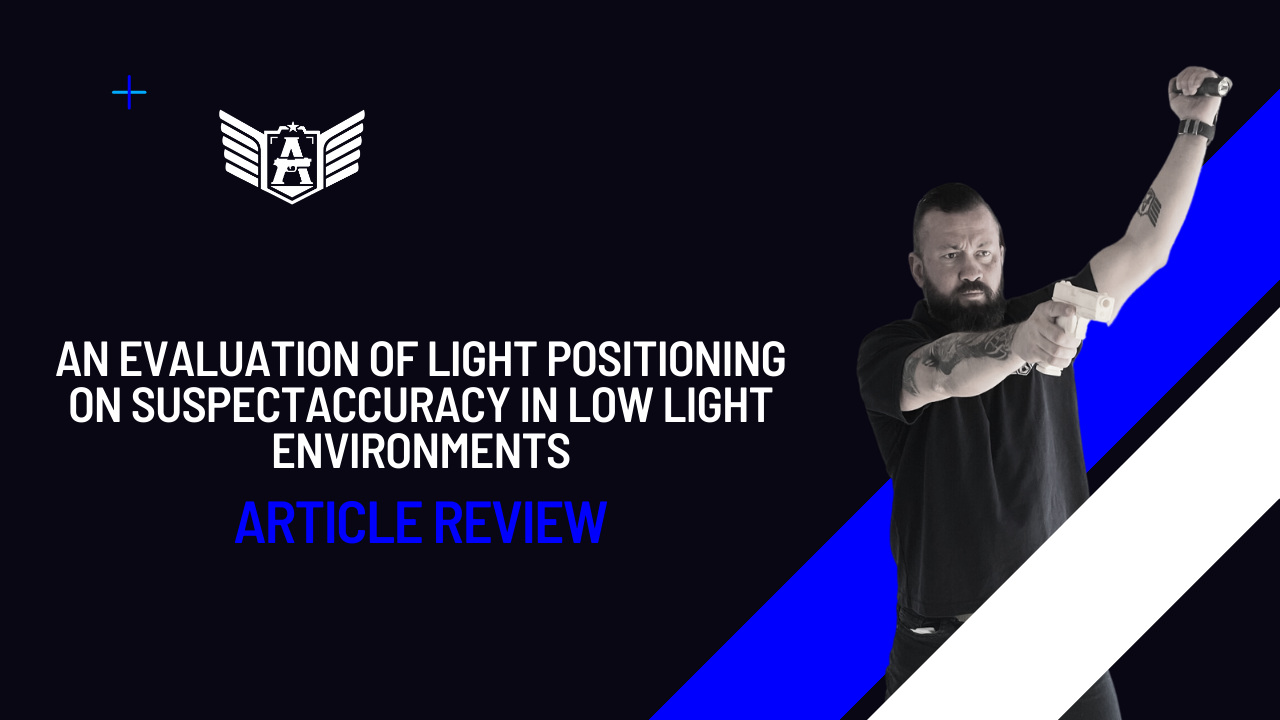
In a recent study led by J. Pete Blair, M. Hunter Martaindale, and Emily D. Spivey, the intricate relationship between flashlight techniques and police accuracy in low-light environments was thoroughly investigated. Policing inherently involves unique occupational hazards, notably felonious assaults and homicides, setting it apart from other professions. The study delved into the challenges officers face in low-light conditions, where incidents are more likely to occur, and emphasized the significance of evidence-based training methods to mitigate risks.
The research focused on three common flashlight techniques: Harries Style (light held in front of the chest), Neck Index Style (light positioned by the officer’s shoulder), and Dagger Style (light extended out to the side). Results revealed that 73% of participants fired at the officer when the light was activated. Notably, participants using the Dagger technique demonstrated significantly lower accuracy, affirming the initial hypothesis that flashlight techniques placed away from the officer’s body can reduce suspect accuracy.
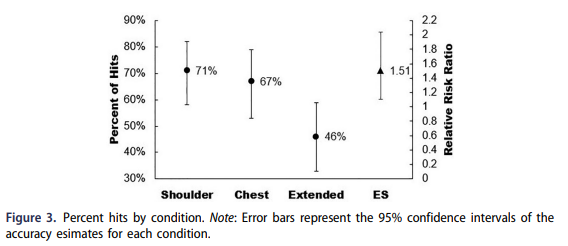
These findings carry substantial implications for law enforcement training programs. The study highlights the need for tailored training methods that consider the nuanced challenges officers face in low-light scenarios. Officers utilizing Harries or Neck Index styles were found to be 1.5 times less likely to be hit than those employing the Dagger technique, underscoring the importance of selecting appropriate flashlight tactics to enhance overall officer safety.
J. Pete Blair, M. Hunter Martaindale & Emily D. Spivey (2021): An Evaluation of
Light Positioning on Suspect Accuracy in Low Light Environments, Justice Evaluation Journal, DOI:
10.1080/24751979.2021.1970482
TRAIN. MEASURE. EQUIP.
Continue learning through ABA research and training. When equipment is the next variable, go directly to the ABA Store.
GET THE EQUIPMENT →Continue from research to practice
Knowledge is useful when it changes what you do next.
Move from analysis to professional protective application through ABA | Guard.
Ask about ABA | Guard