Integrated Trigger-Based Rail Management for Professional Applications
In the modern AR ecosystem, incremental improvements are common. Structural innovation is not.
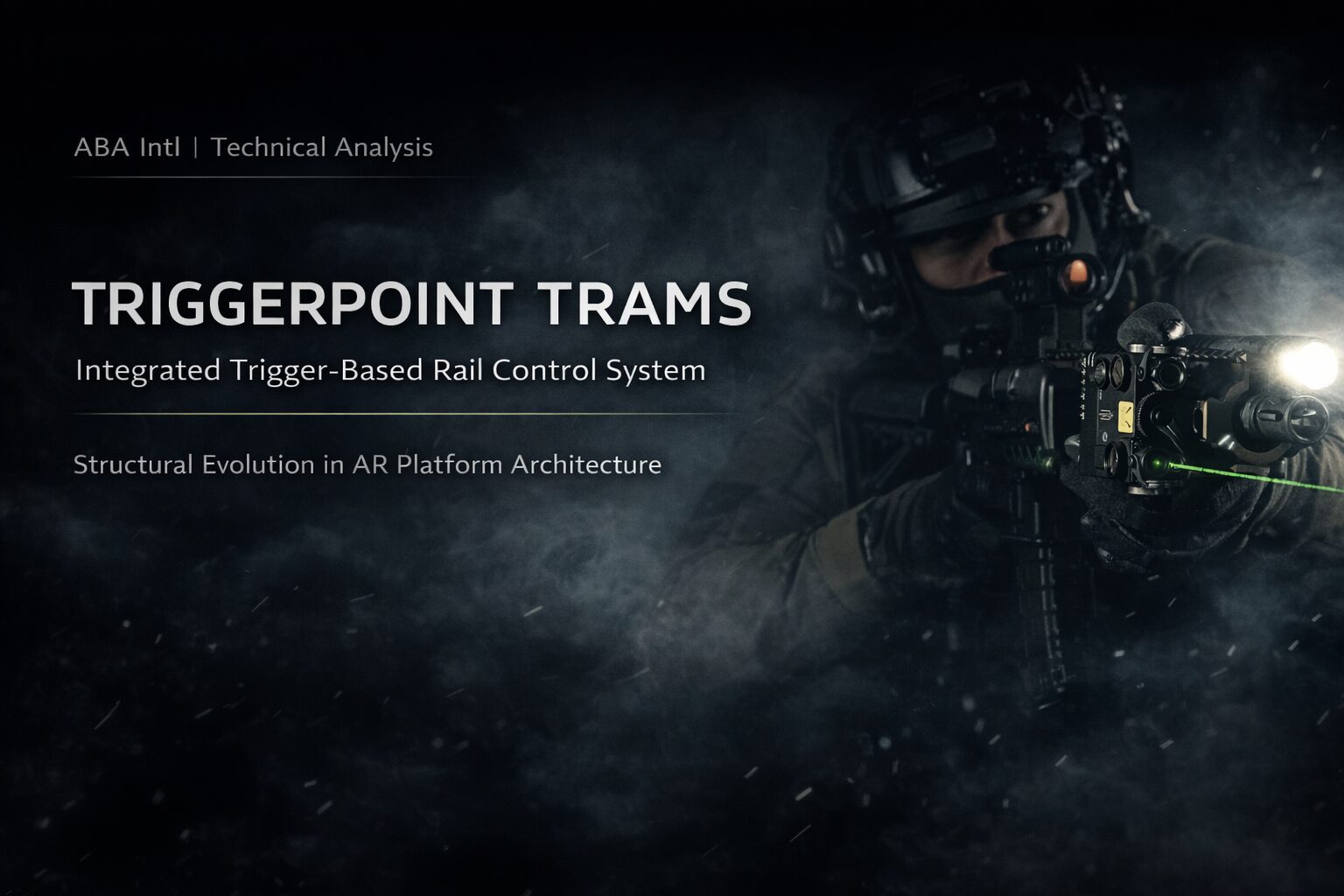
The Trigger-Integrated Rail Accessory Management System (TRAMS) represents a departure from conventional accessory activation paradigms. Rather than functioning as an add-on component, TRAMS redefines how illumination and laser systems integrate with the AR platform’s core control architecture
.
For professional users operating forged mil-spec AR lowers (M4/M16-type platforms), this system introduces a fundamentally different logic: accessory activation embedded directly within the natural trigger interaction cycle.
The Structural Problem: Externalized Activation Systems
Traditional rail-mounted light and laser activation methods rely on:
- Tape switches
- Rail-mounted pressure pads
- External cabling
- Support-hand grip manipulation
While functional, these systems introduce mechanical complexity, cable exposure, snag hazards, and additional motor tasks under stress.
.
In high-focus environments — particularly low-light engagements — every added layer of external control increases cognitive load and physical variability.
TRAMS addresses this at the architectural level.
Integrated Trigger Logic: Activation Through Natural Movement
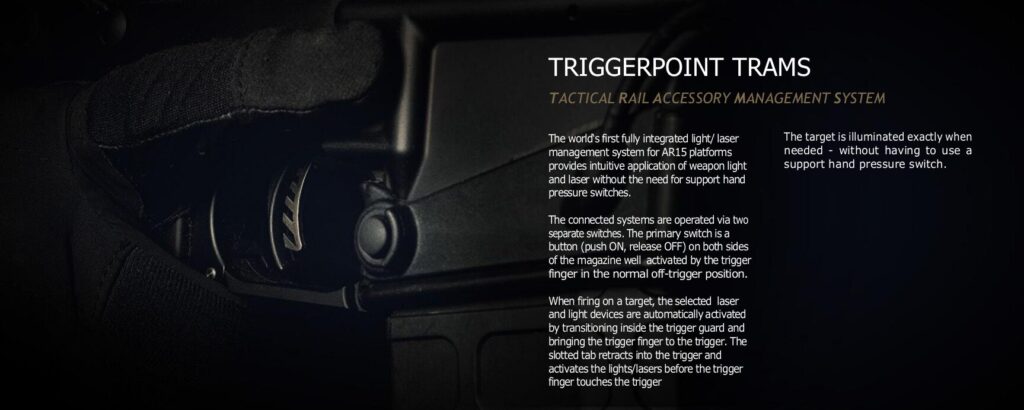
TRAMS is described as the world’s first fully integrated light/laser management system for AR15 platforms
. Its defining characteristic is the relocation of activation control into the trigger engagement sequence itself.
How It Functions
The system employs two primary activation mechanisms:
- Primary Ambidextrous Magazine-Well Buttons
- Press ON / Release OFF logic
- Designed for surveillance or area familiarization
- Activated by the index finger in the off-trigger position
Trigger-Integrated Activation Tab
- A near-frictionless sliding tab integrated into a modified single-stage trigger
- Activates selected light/laser systems as the trigger finger transitions inside the guard
- Illumination occurs before the finger contacts the trigger face
The key design principle: illumination coincides with the natural movement of the trigger finger — without altering grip, stance, or platform stability
.
The result is a cleaner rail, reduced cable exposure, and preservation of established motor patterns.
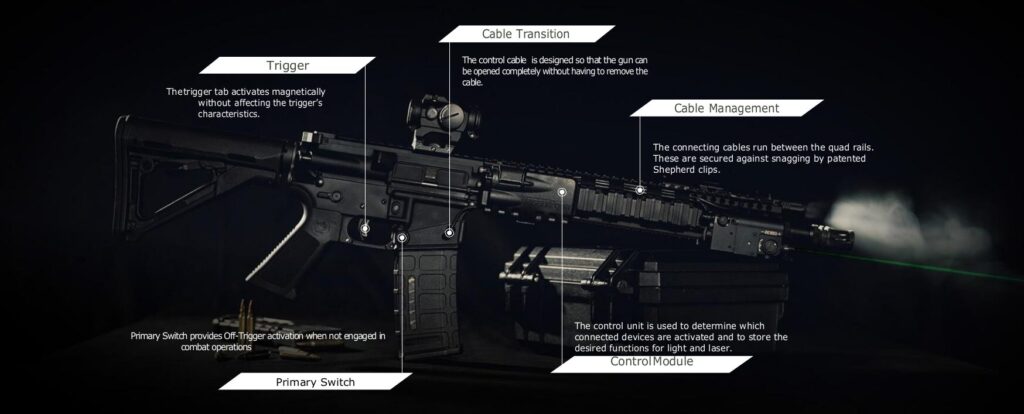
Control Architecture and Modularity
The TRAMS control module provides:
- A three-position rotary selector (OFF / Channel A / Channel B)
- Configurable light/laser channel assignments
- Four input ports for compatible systems
Example configurations may include:
- Channel A: Visible light + visible laser
- Channel B: IR light + IR laser
This design eliminates the need to manipulate difficult selector switches on individual laser units, particularly in gloved or low-visibility conditions
.
The architecture supports NATO-standard plug interfaces, while allowing alternative connector systems as required
.
Cable Management and Platform Integrity
Unlike typical external routing solutions, TRAMS incorporates structured cable management:
- Cables run between quad rails
- Secured via patented Shepherd clips
- Designed to minimize snagging
- Plug-in coupling allows separation of upper and lower receivers without cable removal
Importantly, in the event of severe cable snagging, the system is engineered to fail in a way that preserves independent activation of mounted accessories
.
This is not simply ergonomic refinement; it is resilience-oriented design.
Operational Relevance for Law Enforcement and Professional Users
According to the executive overview, TRAMS was designed specifically for professional AR ecosystems rather than universal retrofits
For law enforcement and institutional users, its practical advantages include:
- Grip-consistent illumination control
- Reduced secondary motor tasks
- Cleaner rail architecture
- Reduced external cable exposure
- Intuitive activation logic
The system does not alter established doctrine: “The finger does not touch the trigger until the decision to fire may be required” remains intact
Illumination may coincide with decision-making, but mechanical discharge requires intentional trigger engagement.
This alignment between illumination timing and readiness may reduce sympathetic squeeze risk from support-hand activation under stress
.
Technical Specifications
- Weight: 140 g
- Battery: 1x CR-1/3N
- Battery Life: Approximately 2 years (standby)
- Water Resistance: IPX8 (15 m)
Installation may be performed by the end user following instructions, with full assembly services also available
.
Market Positioning: Controlled Introduction Strategy
TRAMS is not positioned as a mass-market retail product.
The international rollout follows a controlled, partner-led introduction model focused on:
- Selected premium dealers
- Qualified distributors
- Specialized manufacturers
- Institutional evaluators
Its strategic value lies in:
- Structural differentiation within a saturated AR accessory market
- Premium-tier positioning
- Limited availability
- Professional ecosystem targeting
This approach reinforces the system’s positioning as an architectural upgrade rather than an accessory.
Conclusion: From Accessory to Architecture
Most accessory innovations operate at the periphery of the platform.
TRAMS operates at the interface between human motor behavior and mechanical control.
By integrating illumination activation into the natural trigger interaction cycle, the system reframes how AR users manage light and laser systems under stress. It reduces external complexity, preserves established shooting fundamentals, and offers a structurally differentiated solution for professional platforms
.
For serious AR ecosystems seeking architectural refinement rather than incremental add-ons, TRAMS represents a significant evolution in control design.