
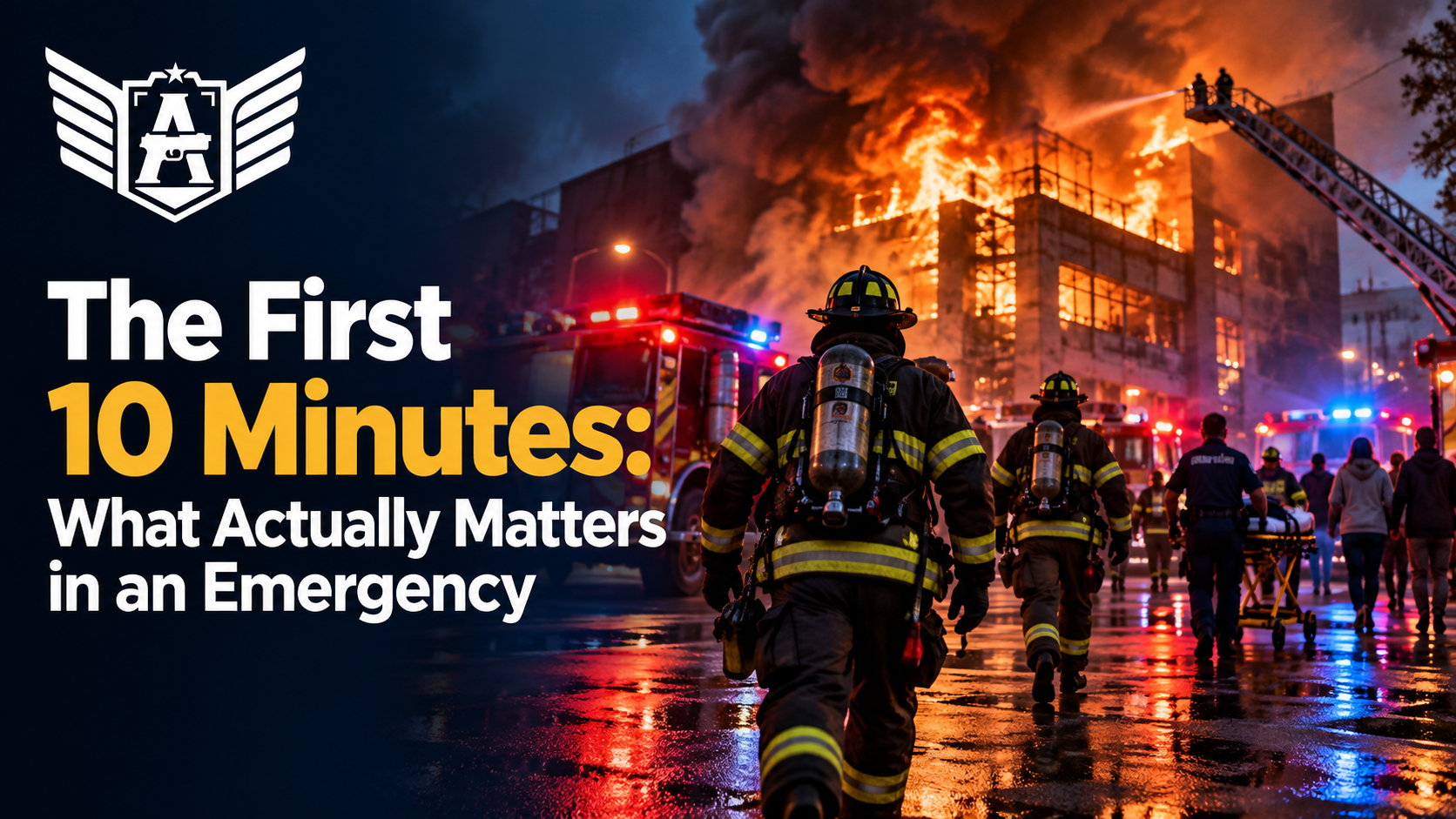
A fire alarm sounds, but there is no visible smoke. A building shakes, but nobody knows whether the structure has been damaged. Someone collapses in a crowded room. An explosion is heard somewhere outside. A vehicle crashes. Communications fail. People receive conflicting instructions.
For those present, the first problem is often not the hazard itself. It is understanding what is happening quickly enough to make a useful decision.
Emergency management is broader than emergency response. FEMA defines emergency management as the function that creates the framework through which communities reduce vulnerability to hazards and cope with disasters. It includes preparedness, mitigation, response and recovery. Response is the portion that begins when the event is actually occurring: actions intended to save lives, protect property and the environment, and meet immediate human needs.
The first ten minutes sit at the critical boundary between those two worlds.
The plans, training, equipment and procedures developed before an incident are suddenly tested against reality. Assumptions begin colliding with incomplete information. People must decide whether to evacuate, shelter, call for help, render medical aid, isolate a hazard, shut something down, or simply move away.
Ten minutes is not a formal universal standard. Some emergencies develop over hours; others become lethal in seconds. The sequence described here should therefore be understood as an operational framework rather than a stopwatch-driven doctrine.
The objective is simple:
Recognize the problem, protect life, establish control, communicate, and prevent the incident from becoming worse.
The Emergency Before the Emergency
There is a common misconception that people immediately understand when they are experiencing an emergency.
They often do not.
The first signal is frequently ambiguous: a sound, smell, vibration, warning message, unusual behavior, equipment failure or observation that does not yet provide enough information to explain what is happening.
People consequently spend time interpreting the situation.
Is that alarm real?
Was that an explosion?
Should we leave?
Has somebody already called emergency services?
Is this part of a drill?
Should we wait for instructions?
This period is sometimes more important than the speed at which people can physically move afterward. Research into the evacuation of the World Trade Center on September 11, 2001, found that delays in beginning evacuation were an important component of overall evacuation performance. Occupants interpreted environmental cues through their previous experience, training, perception of risk and information received from others before deciding what to do.
Emergency preparedness therefore cannot be reduced to knowing where an exit is.
People must be prepared to recognize when normal conditions have ended.
Case Study: September 11
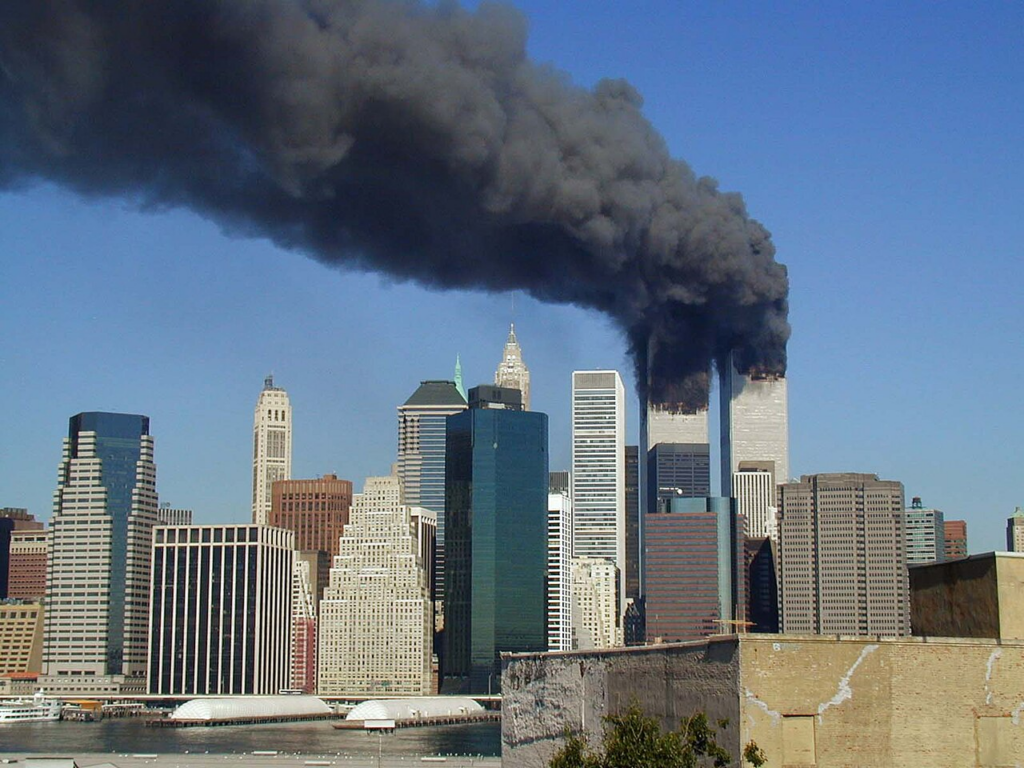
The evacuation of the World Trade Center provides one of the most extensively studied examples of human behavior during a major emergency.
Approximately 17,400 people were inside the two towers when the attacks occurred. NIST estimates that approximately 87 percent evacuated successfully, including 99 percent of occupants who had been below the impact floors.
Many things went right.
Thousands of occupants began moving through the stairwells. People helped coworkers and strangers. Previous fire-drill participation appears to have contributed positively to evacuation preparedness. In the South Tower, approximately 3,000 people managed to get sufficiently low in the building to escape before the second aircraft struck.
But the investigation also identified important weaknesses.
Some occupants delayed leaving while attempting to understand what had happened. Many had never previously used the building’s stairways. Others were not physically prepared for a full descent. Transfer corridors created uncertainty because evacuees did not always know whether they were still following the correct escape route.
Communication presented another problem.
NIST found that occupants did not consistently receive coordinated and informative emergency communications. In the South Tower, some occupants heard announcements telling them to return to their offices before later being told to evacuate.
The lesson is not that every alarm requires uncontrolled flight from a building.
It is that waiting for perfect information can itself become a decision with consequences.
When observable conditions indicate a credible threat, the threshold for protective action should not require absolute certainty.
Case Study: Grenfell Tower and the Failure to Change Strategy
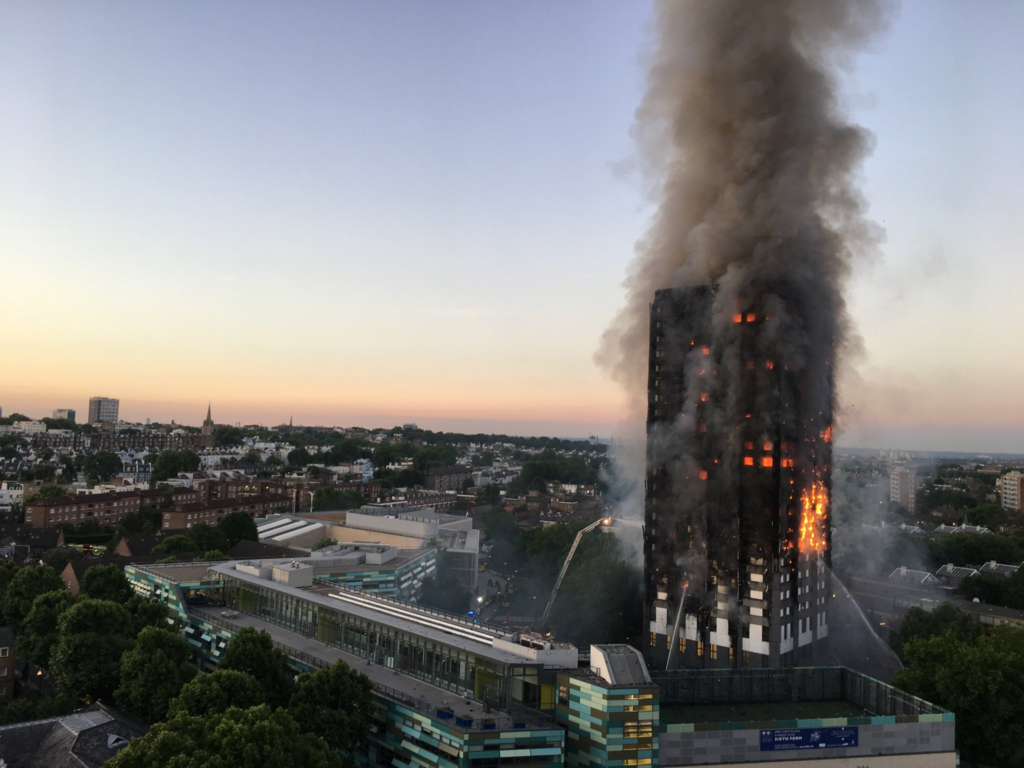
The Grenfell Tower fire in London on June 14, 2017, demonstrates a different problem: a response strategy that remained in place after the conditions that justified it had changed.
High-rise residential buildings are often designed around compartmentation. A fire inside one apartment should remain sufficiently contained to allow occupants elsewhere to remain protected while firefighters address the incident. Under those conditions, a stay-put strategy can be entirely rational.
The problem at Grenfell was not simply that such a strategy existed.
The problem was that the building was no longer behaving according to the assumptions on which the strategy depended.
The Grenfell Tower Inquiry concluded that once it became apparent that compartmentation had failed and the fire was spreading uncontrollably, an organized evacuation should have been initiated. The Inquiry found that such a decision could and should have been made between approximately 1:30 and 1:50 a.m. The stairs remained substantially free of smoke until around 1:50 a.m., and many residents had already chosen to leave despite the existing stay-put advice.
Seventy-two people ultimately died.
This illustrates one of the most important principles in emergency management:
A correct plan can become the wrong plan when its underlying assumptions are no longer true.
Procedures exist to support decision-making. They cannot replace observation and judgment.
The first minutes of an emergency therefore require continuous reassessment:
What has changed?
Is the original strategy still valid?
Are conditions improving or deteriorating?
Has the hazard moved?
Is the designated escape route still usable?
Has new information changed the risk?
A plan that cannot adapt is not resilience. It is rigidity.
Case Study: Air France Flight 358
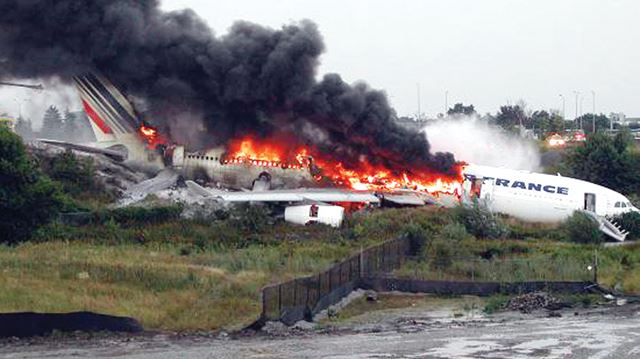
On August 2, 2005, Air France Flight 358 overran the runway while landing in severe weather at Toronto Pearson International Airport.
The Airbus A340 left the runway, entered a ravine and caught fire.
There were 297 passengers and 12 crew members aboard.
All 309 people escaped before the fire destroyed the aircraft.
From a life-safety perspective, the evacuation was remarkably successful.
Yet investigators identified behavior that could easily have produced a different outcome.
Cabin crew repeatedly instructed passengers to leave their carry-on baggage behind. Despite those commands, 49 percent of passengers who responded to investigators’ questionnaires reported attempting to take baggage with them. Forty-eight percent reported that baggage slowed the evacuation because passengers retrieving their belongings obstructed aisles and access to exits.
One passenger delayed others while retrieving and arranging personal belongings despite commands from a flight attendant and protests from passengers waiting behind him.
The behavior seems irrational when viewed afterward.
During an emergency, however, people do not suddenly become optimized decision-making machines. They retain habits, possessions, social expectations and familiar routines. Under stress, the ordinary can compete with the urgent.
The operational lesson is significant:
During a life-threatening emergency, anything that does not contribute to immediate survival can become interference.
That includes property.
It includes recording the incident.
It includes searching for information that is not necessary for the immediate decision.
It includes attempting tasks for which the person is not trained.
It can even include continuing normal work simply because nobody has explicitly told people to stop.
What the First Ten Minutes Are For
The objective of the first ten minutes is not to solve the entire emergency.
It is to establish a stable enough situation that the next decisions can be made intelligently.
For individuals, that means surviving the immediate hazard and helping others where reasonably possible.
For organizations, it means transitioning from normal operations to emergency operations.
For managers, supervisors and security personnel, it means creating an initial operational picture: what happened, where it happened, who is affected, what remains dangerous and what resources are required.
For everyone involved, it means avoiding secondary casualties.
The following sequence provides a practical framework. The stages will often overlap, and a rapidly developing incident may compress several of them into seconds.
- 0:00–1:00 — Recognize the abnormal condition and protect yourself from the immediate hazard. Stop treating the situation as normal. Look, listen and identify what you can actually observe. Fire, smoke, structural damage, violence, electrical hazards, traffic, hazardous materials and unstable machinery all require different responses. Do not approach a hazard merely to understand it better. If remaining where you are presents an obvious danger, move first and assess from a safer position. The first rule of useful emergency response is not to create an additional casualty.
- 1:00–2:00 — Raise the alarm and summon the appropriate resources. Emergency services cannot respond to an incident they do not know exists. Activate the local alarm or notification system where appropriate and contact emergency services as early as practical. Provide concise information: exact location, nature of the emergency, known hazards, approximate number of injured or threatened people and the safest available access point. OSHA specifically identifies rapid emergency reporting and effective employee notification as fundamental components of emergency action planning.
- 2:00–3:00 — Make the immediate life-safety decision: leave, remain protected, or relocate. Evacuation is not automatically the correct response to every emergency. Fire, structural instability and some internal hazards may require immediate evacuation. An external chemical release or severe weather may make sheltering inside safer. Other threats may require restricting access to parts of a facility or moving people away from a particular area. OSHA specifically recommends that emergency plans establish both the conditions requiring evacuation and those under which shelter-in-place may be safer. The important point is not to default automatically to one response regardless of the hazard.
- 3:00–4:00 — Establish control and assign responsibilities. Someone needs to coordinate the immediate response. In a small group this may be informal; in an organization it should follow the established emergency chain of command. Identify who is contacting responders, who is directing evacuation or movement, who is accounting for personnel and who is providing medical assistance. Avoid having five people make the same telephone call while nobody checks the adjacent room. Good emergency management converts a crowd of concerned individuals into coordinated functions.
- 4:00–6:00 — Account for people and identify those who need assistance. Once people have reached a safer location, determine who is present and who may still be exposed. Do not assume that silence means everyone escaped. Identify missing personnel and their last known locations and communicate that information to responders rather than sending untrained people back into danger. Visitors, contractors, children, older adults and people with mobility, sensory or cognitive limitations require specific consideration. OSHA identifies personnel accountability and assistance for people with disabilities as central elements of evacuation planning.
- 6:00–8:00 — Address immediate injuries and controllable secondary hazards. Once immediate exposure has been reduced, provide first aid or bleeding control within the limits of your training and available equipment. Prevent secondary collisions, isolate dangerous areas and shut down equipment only when doing so is part of the emergency plan and can be accomplished safely. Do not allow the desire to “do something” to pull people back into an uncontrolled hazard. Firefighting, technical rescue, hazardous-material intervention and entry into unstable structures require specialized capability.
- 8:00–9:00 — Communicate a short, common operational picture. People need actionable information, not speculation. State what is known, what is not known, what people should do now and what they must not do. Avoid forwarding rumors or issuing instructions that exceed available evidence. If conditions change, update the instruction. The World Trade Center and Grenfell investigations both demonstrate why conflicting or outdated information can materially affect emergency behavior.
- 9:00–10:00 — Reassess and prepare the handoff to professional responders. Ask again whether the original decision remains valid. Is the hazard expanding? Is the assembly area still safe? Is anyone missing? Are there new casualties? Have access routes changed? When responders arrive, provide a concise handoff: what happened, when it happened, known hazards, actions already taken, number and location of casualties, missing persons and any information about utilities, access points or dangerous materials that may affect the response. Then allow the incident command structure to take control.
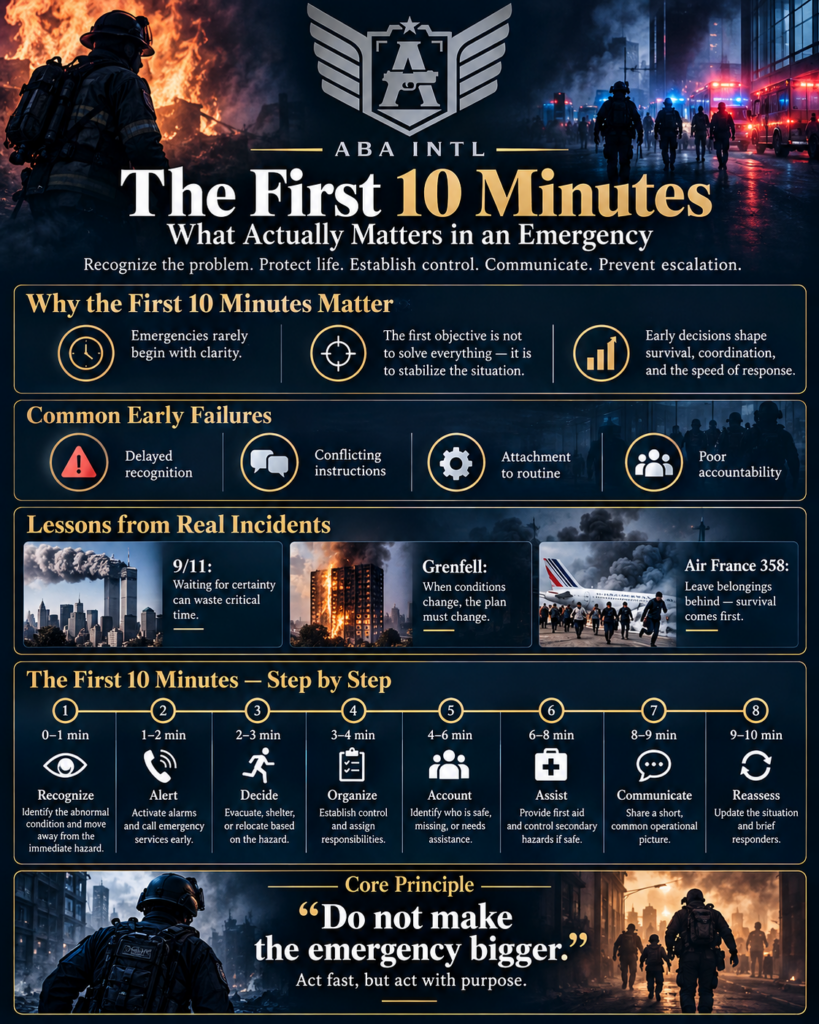
The Principle Behind the Sequence: Do Not Make the Emergency Bigger
This framework can be summarized by a single operational principle: do not allow the response to compound the emergency. In emergency management, the initial hazard is only one part of the problem. Delayed notification, poor coordination, conflicting instructions, inadequate accountability, and unnecessary exposure can rapidly increase the severity of an incident and create consequences that did not exist at the outset.
A minor fire can become a major emergency when notification is delayed; an evacuation can become unsafe when nobody accounts for missing personnel; and a single casualty can become multiple casualties when an untrained responder enters a hazardous environment without adequate protection. Likewise, a manageable incident can deteriorate into confusion when several individuals issue uncoordinated instructions, while an otherwise orderly evacuation may be slowed by occupants attempting to retrieve personal belongings or perform tasks that are no longer operationally relevant.
Even a response strategy that was appropriate at the beginning of an incident can become dangerous if changing conditions invalidate the assumptions on which it was based. Effective emergency management therefore depends not on dramatic intervention, but on disciplined, coordinated, and adaptive decision-making under conditions of uncertainty. The objective is not merely to act quickly, but to ensure that each action reduces risk, improves control, or supports the protection of life rather than introducing additional hazards, casualties, or operational complexity.
Speed Matters. Haste Does Not.
There is a critical distinction between acting quickly and acting impulsively. Effective emergency response requires speed, but that speed must be directed toward a clear operational purpose rather than becoming movement for its own sake. During the first ten minutes, the response should progressively reduce uncertainty, limit exposure, improve coordination, and prevent the situation from deteriorating further.
A useful action should contribute to at least one of four objectives: protecting people, improving the quality of available information, bringing appropriate resources to the incident, or preventing additional harm. Actions that do not support any of these objectives should be examined carefully, particularly when they consume time, attention, personnel, or access to critical areas.
This becomes especially important under conditions of task saturation. Emergencies generate competing demands almost immediately: people begin making calls, checking cameras, opening doors, moving equipment, searching rooms, sending messages, requesting updates, and attempting to solve multiple problems at once. The volume of activity may increase rapidly even as overall control declines, creating the false impression that a busy response is necessarily an effective one.
The solution is not simply to move faster. It is to establish priorities, sequence actions, and ensure that limited attention and resources are directed toward the tasks that most directly protect life, improve situational awareness, and stabilize the incident.
Preparedness Determines What Happens After the Alarm
No ten-minute protocol can compensate completely for poor preparation.
Organizations should already know how emergencies are reported, how occupants are warned, who can order an evacuation, where people assemble, how personnel are accounted for, how visitors are managed, who performs medical duties and who has authority to communicate with responders.
These are not exotic requirements. They are among the basic elements OSHA identifies for an Emergency Action Plan.
Training matters because an emergency is a poor time to encounter a procedure for the first time.
The World Trade Center investigation found that two-thirds of surviving occupants reported having participated in a fire drill during the preceding year, and 93 percent of those who participated had been shown the nearest stairwell. At the same time, more than half of survivors had never actually used a WTC stairwell before September 11.
Knowing that an exit exists and having physically followed the route are not the same level of preparation.
Likewise, writing a plan and exercising a plan are not the same capability.
The First Ten Minutes Begin Before the Emergency
One of the most important principles in emergency management is that the effectiveness of the first ten minutes is determined, to a significant extent, before the emergency begins. Preparedness reduces the number of critical decisions that must be improvised under pressure and allows individuals and organizations to act from an established framework rather than from uncertainty alone.
A person who already knows more than one exit route does not need to search for alternatives in smoke or darkness. An organization with an established accountability system does not need to create one after personnel have already dispersed. An employee who understands the meaning of an alarm can respond without first trying to determine whether the situation is serious, while a manager who has practiced decision-making under uncertainty is less dependent on complete information before taking appropriate action. In the same way, a team that has rehearsed communication protocols is less likely to generate conflicting messages, delays, or unnecessary improvisation when conditions begin to deteriorate.
Preparation also requires understanding the assumptions behind emergency procedures. Plans are built around expected conditions, available resources, defined hazards, and anticipated human behavior. When those assumptions no longer apply, organizations that understand the logic of their procedures are better positioned to recognize the change and adapt their response accordingly.
Emergency management is therefore not the elimination of uncertainty; that is neither realistic nor possible. It is the development of people, systems, and procedures capable of functioning effectively despite uncertainty. When an emergency begins, the first ten minutes are not the moment to become prepared. They are the moment when the quality of prior preparation becomes operationally visible.
TRAIN. MEASURE. EQUIP.
Continue learning through ABA research and training. When equipment is the next variable, go directly to the ABA Store.
GET THE EQUIPMENT →Continue from research to practice
Knowledge is useful when it changes what you do next.
Use this evidence to identify the next capability you need to build and the ABA route designed for it.
Find your ABA training path