
Reading the Knife: Understanding Close-Quarter Attacks through Science
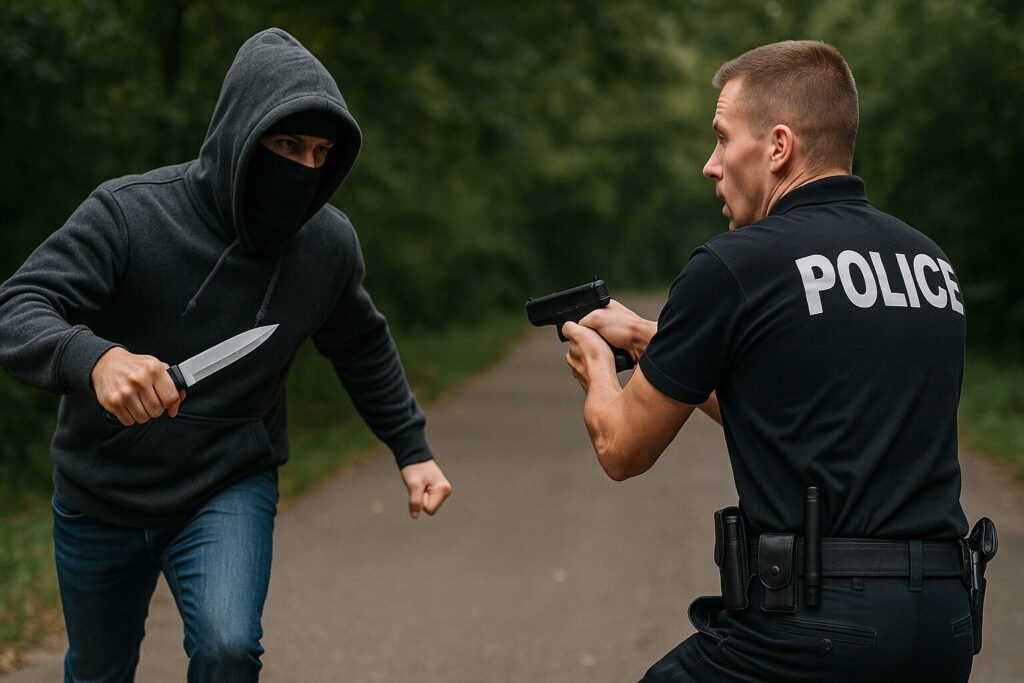
I recently read a compelling article by Dr. J. Pete Blair on his Tactical Science Substack titled “This is an 8-Foot Knife Attack. You […]
Read article →ABA Research archive
I recently read a compelling article by Dr. J. Pete Blair on his Tactical Science Substack titled “This is an 8-Foot Knife Attack. You […]
Read article →
A comprehensive systematic review published in Aggression and Violent Behavior (Browne et al., 2022) synthesizes data from 21 empirical studies—15 focused on offender profiles […]
Read article →
Encountering a knife threat demands more than just reflexes; it requires a strategic and calculated response. In the realm of self-defense, understanding the dynamics of such perilous situations is paramount. Each decision made in the heat of the moment can significantly impact the outcome.
Read article →
In our exploration of knife combat tactics, we delve into the intricacies of strategies crucial for personal safety in challenging scenarios. These tactics serve as the cornerstone between survival and peril, offering invaluable insights into navigating confrontations involving bladed weapons. From tactical grip choices to strategic misdirection, each element plays a pivotal role in determining the outcome of a knife encounter. Let's delve into these seven strategies in depth, providing a comprehensive understanding of their application and significance in real-world situations.
Read article →
Zero-distance encounters present distinct challenges that necessitate careful preparation and strategic acumen. Defined as the distance at which a person can touch their adversary's chest without moving their legs, zero-distance situations demand a keen understanding of martial skills and tactical awareness to ensure survival.
Read article →
While the theme of "knives" is addressed in various distinct martial arts, it is in Filipino martial arts where it is more extensively studied and perhaps taken more seriously. Risking displeasing a significant portion of our readers, I also need to say that it is with these martial arts that the practitioner is likely to achieve their highest performance, provided, of course, they are well taught and trained.
Read article →
The purpose of this study was to scientifically assess the long-standing 21- foot rule. There are several anecdotal publications looking at the 21-foot rule as a standard in policing. This study uses experimental design to examine whether this standard should continue in modern-day policing. The 21-foot rule was tested in three independent experimental design studies. The first study measured the average speed at which a person could run 21 feet. The second and third studies tested the speed at which an officer could draw and fire their weapon with no stress and under stress respectively. The final study examined methods for increasing survivability for the officer (movement). The findings show the 21-foot rule to be an inadequate standard for officers to safely draw and fire their weapons when being charged by a suspect who’s intent it to cause harm. Additionally, different strategies of moving can increase the officer’s ability to survive.
Read article →
It is estimated that the first knife was invented around 2.6 million years ago. Since then, countless forms and construction materials have been employed for various purposes. Among this infinity of sizes and shapes, however, some have gained more prominence and continue to be used in the present day.
Read article →
ABA Intl’s knife combat courses comprise a collection of key teachings to help you survive a lethal encounter with a blade. You will learn […]
Read article →
Introduction The knife was the first smart tool invented by the human race, and for a smart human, this is last tool of which […]
Read article →