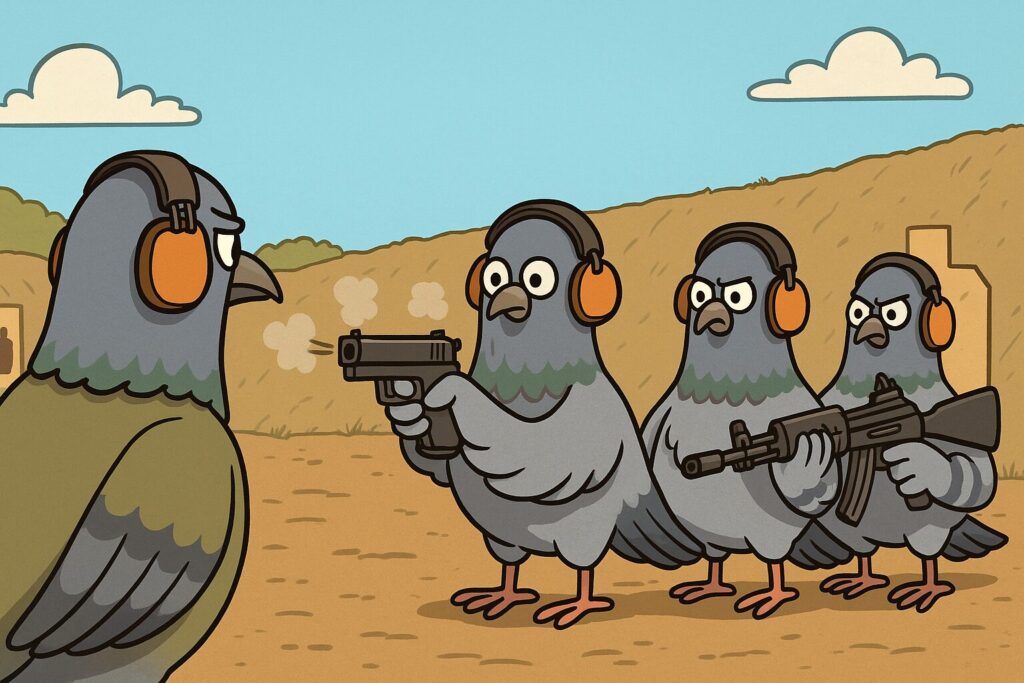

Hello! In today’s text, I’m going to teach you how to hurt egos and lose friends.
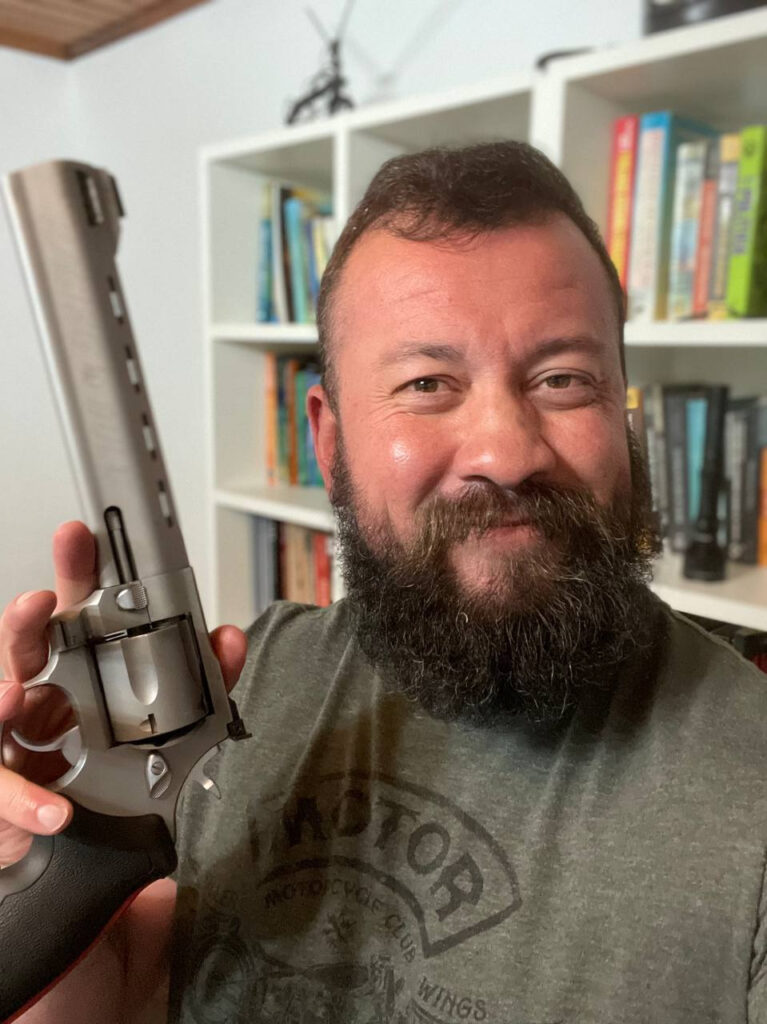
If there’s one thing that upsets revolver enthusiasts, it’s saying that revolvers aren’t good weapons (just like the 1911s, but we’ll tackle one front at a time).
Revolvers are incredible tools. I love seeing them in action, the synchronization of their mechanisms, the level of craftsmanship, and the elegance in their use. By the way, you’ve probably seen the incredible Jerry Miculek breaking the world record at his prime, right?
All of that is absolutely fantastic, but that doesn’t mean they’re the smartest choices when it comes to armed combat. There are engineering features that can be achieved with pistols that are technically impossible in revolvers, making them obsolete.
One key factor is capacity. The amount of firepower used in combat has a direct relationship with your level of aggression, your enemy’s inability to make good decisions, and therefore, the likelihood of your success in saving your life.
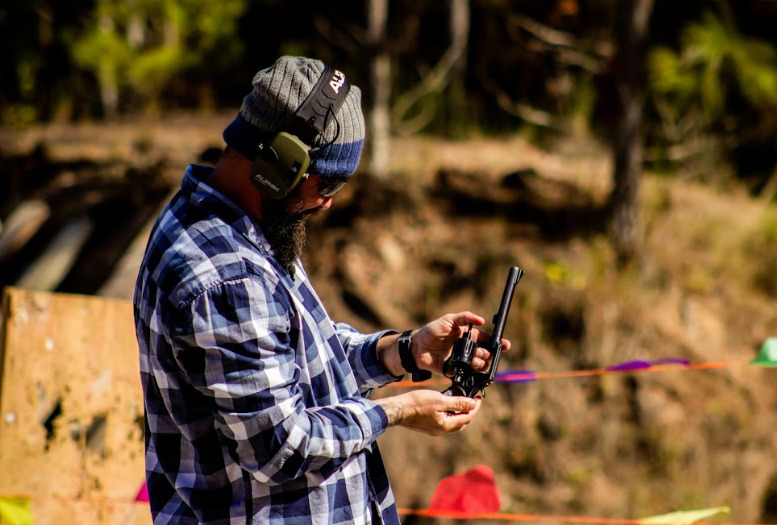
Add to that the reloading capability, with pistols having significantly faster reloads for most people compared to revolvers (using the Miculek reload argument isn’t valid, I’m sorry to say, you’re not Miculek).
Considering factory-original firearms without customizations, pistols tend to have much friendlier triggers than revolvers, leading to better shooter accuracy and the potential for better firing rates.
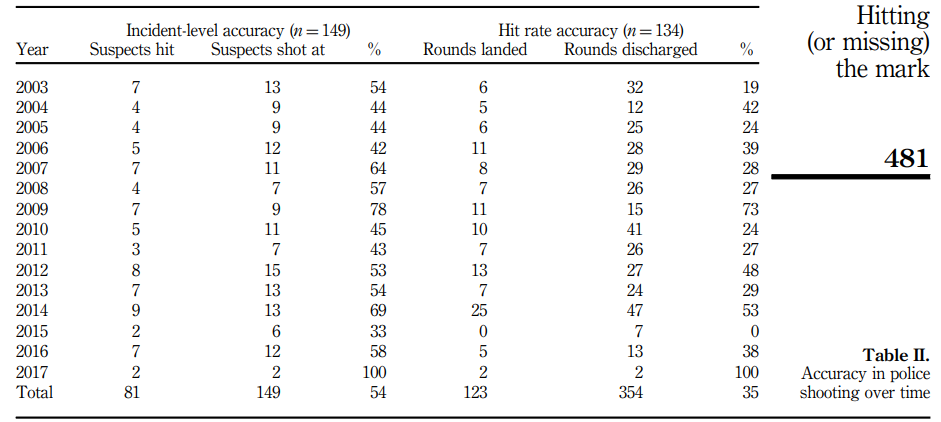
Although the literature provides differing data on combat accuracy, it’s quite rare for police or military units to hit more than 50% of their shots. Often, statistics show that missed shots reach 60-70%. Now, let’s get back to math class: if you have a 6-shot revolver, your combat hit rate is 30%, and you have two enemies, how many shots is it mathematically likely that each of your enemies will take?
6 * 0.3 / 2 = 0.9. Wait, what?
Moreover, by definition, a weapon is a tool that gives you an advantage in combat. Considering that your enemies will likely have pistols, more technically advanced weapons, what’s the advantage of entering a battle at a tactical disadvantage?
In short: capacity and accuracy matter. It’s not cool to be old school in combat. Carry a pistol.
References
Donner, C. M., & Popovich, N. (2018). Hitting (or missing) the mark. Policing: An International Journal. doi:10.1108/pijpsm-05-2018-0060
Continue from research to practice
Knowledge is useful when it changes what you do next.
Use this evidence to identify the next capability you need to build and the ABA route designed for it.
Find your ABA training path