As we travel the world in the name of firearms, we encounter distinct habits in each region among shooters, law enforcement, military personnel, and other firearm users.
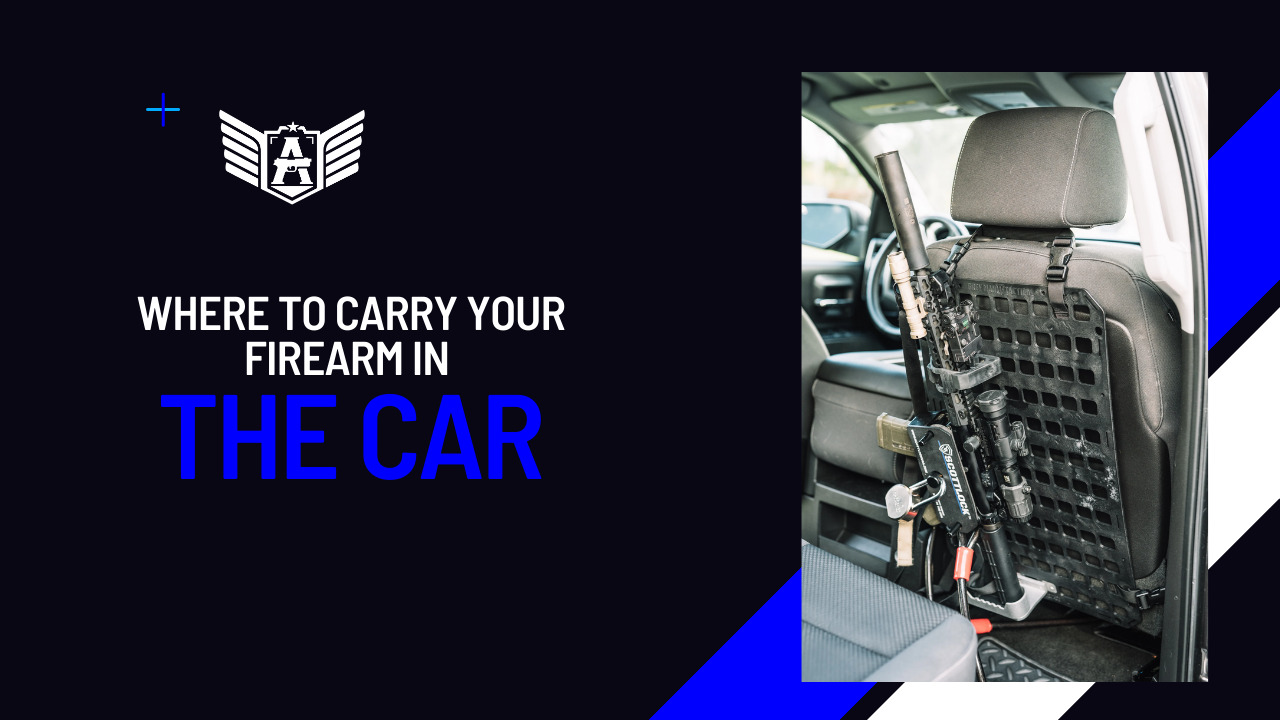
Today, we’re focusing on the location of carrying a firearm inside a car.
It’s common to find individuals who, upon entering their vehicle, remove their pistols from the holster due to discomfort. For instance, they might place them in the car’s console or under the seat. Others have a designated car pistol that remains there consistently without affecting their regular holster-bound firearm habits.
Lastly, some individuals carry rifles and/or shotguns with them, usually in the trunk or a specific compartment.
Which of these methods is the most compelling?
When a civilian carries a firearm on their waist, unlike law enforcement, private security, or the military, their goal is self-protection, likely against an adversary who will determine crucial combat factors such as “when,” “where,” and “how.” In essence, the element of surprise starts from the aggressor’s side.
When a shooter, for instance, chooses to place their pistol under the seat in the name of comfort, they sacrifice quick accessibility, resulting in a tactical disadvantage.
There are those who opt to position the pistol in theoretically quicker spots, like the car’s console. However, they overlook other variables:
- Training Level: Do these individuals practice drawing from the console, or do they assume they can improvise during combat?
- Variability: Unsecured pistols shift with the vehicle’s movement, adding randomness to an already complex situation.
- Information Security: When carrying a concealed firearm, the objective is that no one should know you’re armed. Bringing the pistol to a visible location forfeits this attribute, which could be a crucial tool to counterbalance the surprise factor.
- Quick Exit: In an ambush scenario, you might need to exit the vehicle swiftly. Will those who leave their guns in the console remember to retrieve them when the windshield is being perforated?
Armed civilians should keep their pistols on them at all times. A sturdy holster, accompanied by at least one magazine in an appropriate magazine carrier, is essential.
Training in draws, techniques, and tactics from this position will increase your chance of survival. In moments of extreme stress, it’s important to eliminate variables that might hinder the combat process.
Lucas, what about my rifles? We’ll talk about that in a specific post, check it out soon.
Continue from research to practice
Knowledge is useful when it changes what you do next.
Use this evidence to identify the next capability you need to build and the ABA route designed for it.
Find your ABA training path