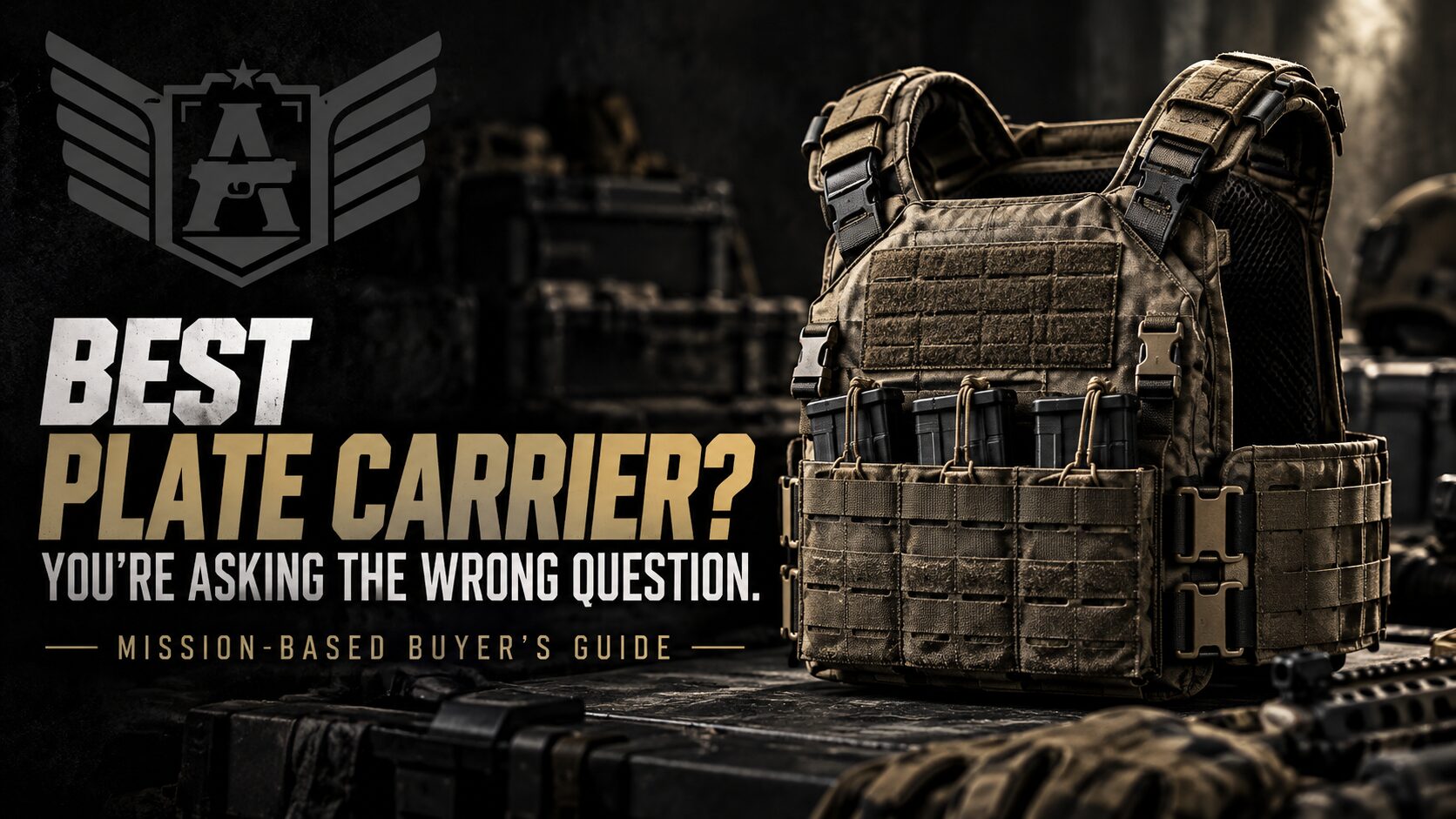
Best Plate Carrier? You’re Asking the Wrong Question.
A mission-based guide to plate carrier architecture, armor fit,
load carriage, cost and performance — before you pay for features
you may not need.
ABA Intl may earn a commission from qualifying purchases made through
links in this article, at no additional cost to you. Editorial conclusions
are based on intended use, architecture and value — not commission rate.
Search for a plate carrier and you will find products that look
broadly similar but solve very different problems.
Some are built to minimize bulk. Some prioritize mobility and ventilation.
Others are designed to support armor plus communications, medical equipment
and other sustained loads.
So “What is the best plate carrier?” is usually the wrong first question.
Best for what?
A plate carrier is an interface between ballistic protection, equipment,
movement, heat management and the human body.
The useful carrier is the one that supports the required protection and
equipment while imposing the smallest acceptable penalty on performance.
A plate carrier is not body armor
The carrier is the platform.
The ballistic plate is the protective component.
Some carriers also accept soft armor or side armor, but an empty carrier
is not rifle-rated protection.
That creates two separate purchasing decisions:
- What armor and protection requirement do you need?
- What platform should carry that armor?
Choose the protection requirement and plate geometry first. Then choose
a carrier that correctly supports those plates.
SAPI/ESAPI sizes, commercial 10×12 plates, Shooter Cut and Swimmer Cut
plates are not interchangeable simply because they can sometimes be
squeezed into the same pocket.
choose the armor requirement first, then select the carrier around the
plate dimensions, geometry and intended equipment load.
The anatomy of a modern plate carrier
Plate bags
Front and rear sections that retain armor. Plate dimensions, cut,
curvature and thickness determine compatibility.
Shoulder interface
Narrow straps reduce bulk. Wider or padded straps can improve comfort
under load but may interfere with backpacks, weapon mounting or other
equipment.
Cummerbund
The lateral structure connecting the front and rear plate bags.
Elastic, skeletal, MOLLE and structural designs change stability,
ventilation, load transfer and side-armor capability.
PALS / MOLLE
Provides modular attachment points. Useful — but every attachment
point also creates an opportunity to add unnecessary weight.
Placards
Detachable front panels allow one chassis to support different
equipment configurations.
Quick release
Rapid-opening hardware can simplify repeated donning, doffing and
emergency removal.
Cummerbunds matter more than they look
A simple elastic cummerbund can be ideal on a minimalist system because
it is light, flexible and relatively comfortable.
A MOLLE or skeletal cummerbund provides more equipment-mounting options.
A structural cummerbund becomes increasingly useful as carried mass rises,
because it can stabilize the load around the torso rather than leaving
the shoulders to support nearly everything.
This is why empty carrier weight alone tells you very little about how a
complete system will feel.
A lighter carrier managing a poorly distributed load can feel worse than
a slightly heavier chassis designed to stabilize that load.
Placards changed the plate-carrier ecosystem
One of the most important developments in modern carriers is the removable
front placard.
Instead of permanently weaving pouches into MOLLE, users can configure
mission-specific front panels and change them without rebuilding the entire
carrier.
That can be particularly useful for:
- instructors;
- law enforcement;
- security professionals;
- users working with different equipment configurations;
- training organizations.
But modularity changes the cost calculation. In many cases you are buying
an ecosystem, not simply a vest.
Plate bags, cummerbunds, placards, side-armor pockets, back panels and
shoulder components can all become separate purchases.
GENERAL-PURPOSE / PROFESSIONAL PICK
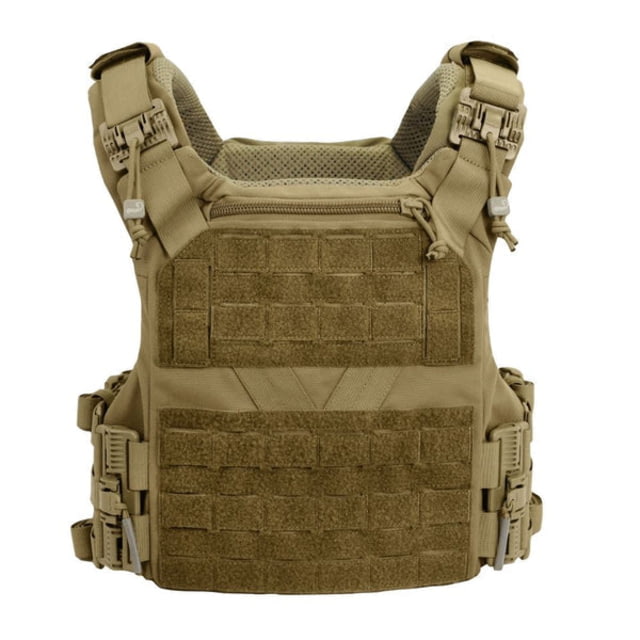
Agilite 3.0 K19 Plate Carrier
The K19 represents the modern overt, highly adjustable carrier concept.
Its architecture emphasizes adjustment, comfort and rapid donning rather
than minimum possible weight.
It is a strong candidate for users who want one versatile platform rather
than the smallest possible carrier.
From about $251 · Always confirm current price,
configuration and availability in ABA Store.
The five major plate-carrier architectures
1. Slick / low-visibility carriers
A slick carrier removes most external structure that is not essential.
Typical characteristics include:
- minimal external webbing;
- reduced bulk;
- thin shoulder straps;
- simple cummerbunds;
- low weight.
These platforms make sense when concealability, vehicle access, mobility
or reduced visual signature matters more than carrying large amounts of
equipment.
The classic mistake is buying a minimalist carrier and then attaching
enough equipment to turn it into an assault carrier.
At that point, the architecture no longer matches the load.
2. Lightweight / minimalist overt carriers
This category sits between slick armor and a full load-bearing system.
You retain a relatively light chassis while gaining practical modularity:
placard compatibility, MOLLE, interchangeable cummerbunds, hydration
integration and equipment routing.
For many armed citizens, instructors, security professionals and training
applications, this is likely the strongest general-purpose balance.
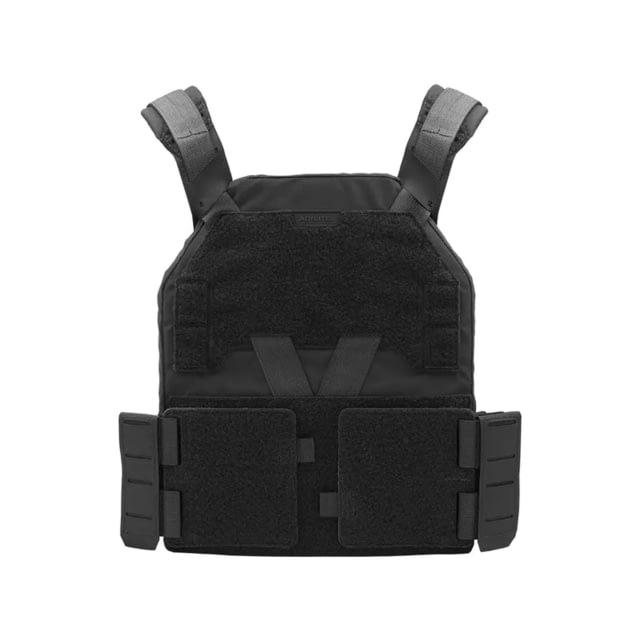
LIGHTWEIGHT / LOW-BULK PICK
Agilite Sub-Zero Plate Carrier
The Sub-Zero represents the lighter end of the modern carrier spectrum.
It makes more sense when mobility and reduced bulk are higher priorities
than maximizing attachment area.
This type of architecture is particularly relevant when the user intends
to keep the equipment load restrained.
From about $162 · Always confirm current price,
configuration and availability in ABA Store.
3. Full-size / load-bearing carriers
Once the carrier is expected to support substantially more than armor,
architecture becomes more important.
A heavier load-bearing platform may include:
- more structural cummerbunds;
- wider shoulder interfaces;
- additional MOLLE/PALS;
- side-armor compatibility;
- communications integration;
- hydration integration;
- back panels;
- quick-release systems.
These systems make sense when the carrier is carrying a significant
portion of the user’s working equipment.
The tradeoff is predictable:
capability increases, but so do mass, heat, bulk and cost.
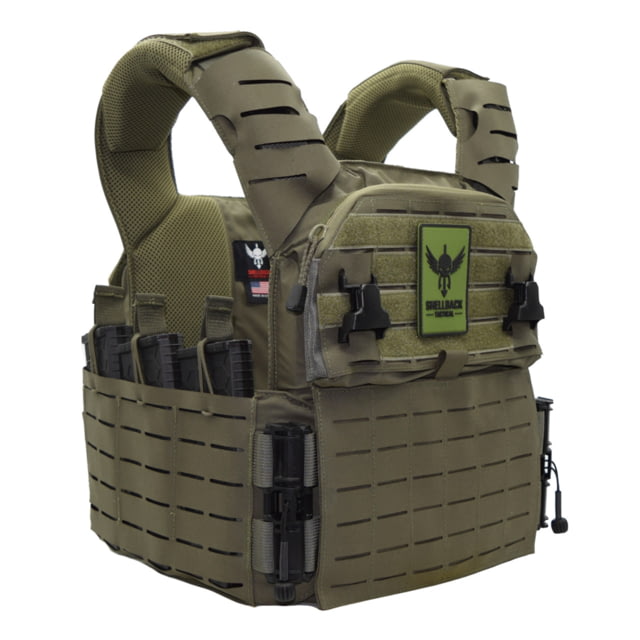
FULL-SIZE / PROFESSIONAL PICK
Shellback Tactical Banshee Elite 3.0
The Banshee Elite 3.0 represents the more substantial overt-carrier
category, with greater emphasis on carrying a working equipment load.
This type of carrier becomes more logical as the required equipment
package grows beyond armor and a minimal front placard.
From about $405 · Always confirm current price,
configuration and availability in ABA Store.
4. Scalable / modular systems
Some manufacturers treat the plate carrier as a system rather than a
finished vest.
The buyer may select:
- front plate bag;
- rear plate bag;
- cummerbund;
- placard;
- shoulder components;
- back panels;
- side-armor components.
This is powerful when the user understands the required end state.
It can also become expensive when components are purchased experimentally
without a clearly defined requirement.
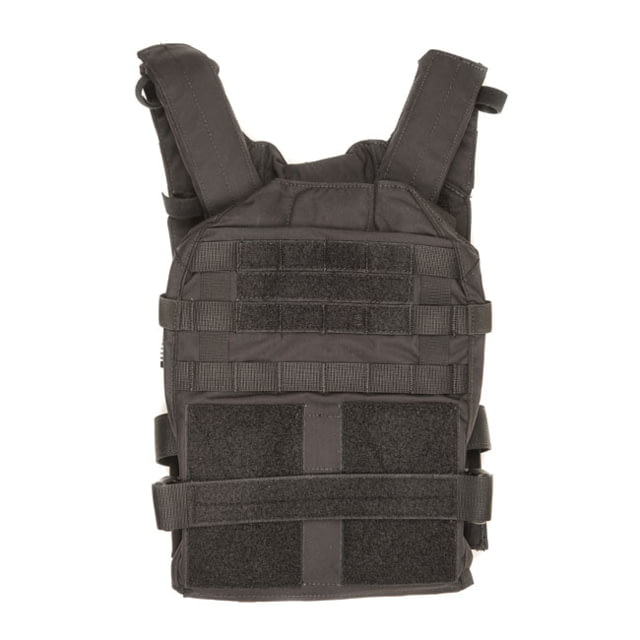
MODULAR / LOAD-CARRIAGE PICK
HRT Tactical Gear RAC Plate Carrier
The RAC is a useful example of a modular overt carrier sitting between
minimalist systems and larger load-bearing platforms.
Its architecture makes sense for users who want to configure their
carrier around changing equipment requirements.
From about $183 · Always confirm current price,
configuration and availability in ABA Store.
5. Law-enforcement / patrol-oriented carriers
Law-enforcement requirements deserve separate consideration.
A patrol officer may need armor integration while simultaneously
accounting for:
- duty-belt interaction;
- vehicle ingress and egress;
- radio equipment;
- body-worn cameras;
- medical equipment;
- identification;
- administrative equipment;
- prolonged daily wear.
That creates a very different optimization problem from a short-duration
range setup.
A carrier that feels acceptable for 30 minutes can become completely
different equipment after several hours of continuous use.
Quick-release systems
Quick-release mechanisms allow the carrier to open or separate rapidly
without repeatedly pulling traditional hook-and-loop sections apart.
They can be valuable for:
- frequent donning and doffing;
- emergency removal;
- medical access;
- vehicle-heavy work;
- professional environments where equipment is repeatedly removed.
But hardware adds components, cost and sometimes bulk.
Again, mission determines whether the feature provides real value.
Low profile vs. load bearing: there is no free lunch
Every carrier design represents a compromise.
Reduce material and weight decreases — but structural support may also
decrease.
Increase padding and comfort may improve — but heat and bulk rise.
Add armor coverage and protection may increase — but mass and restriction
increase.
Add equipment and capability increases — but mobility and endurance may
decline.
What is the minimum configuration that reliably supports the mission?
Cost-benefit by market
Civilian preparedness
For emergency preparedness, there is rarely a compelling reason to begin
with the largest professional load-bearing chassis available.
The priorities are generally more basic:
- correct plate fit;
- reliable construction;
- simple adjustment;
- reasonable modularity;
- manageable weight;
- enough capacity for the intended use.
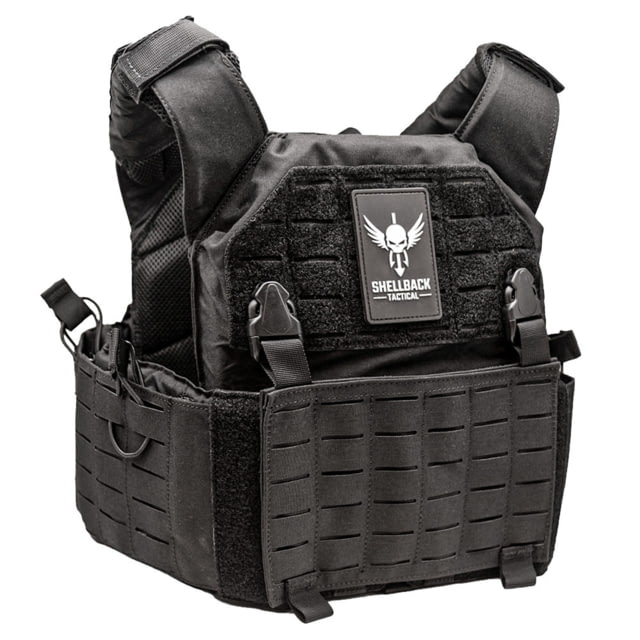
VALUE / CIVILIAN PREPAREDNESS PICK
Shellback Tactical Rampage 2.0 Plate Carrier
The Rampage 2.0 illustrates the value segment well: enough modularity for
preparedness and training without immediately entering premium-carrier
pricing.
For occasional use, spending the saved money on armor quality, medical
equipment and training may produce more benefit than buying the most
expensive carrier chassis available.
From about $126 · Always confirm current price,
configuration and availability in ABA Store.
Range and training
If the objective is learning how armor affects movement, weapon handling,
positional work, equipment access and fatigue, you need a functional
carrier — but not necessarily the most expensive operational platform
available.
This is one of the strongest cost-benefit segments.
Serious armed citizen
For the serious armed citizen, armor may be worn infrequently, but the
consequence of equipment failure can be high.
The rational order of spending is usually:
- appropriate armor;
- correct fit;
- carrier quality;
- medical capability;
- training.
Cosmetics and unused attachment capacity belong much lower on the list.
Law enforcement
Daily-use economics are fundamentally different from occasional-use
economics.
A $100 difference in purchase price becomes relatively small if the
carrier is worn hundreds of hours every year.
Comfort, durability, vehicle compatibility and duty-equipment integration
therefore become economic considerations as well as ergonomic ones.
Private security and protective work
Security work spans an enormous range.
Static security in a controlled environment is not the same problem as
protective work around vehicles. Protective work is not the same problem
as remote-site security.
Exposure, duration, environment and required equipment should define the
system.
Military and high-load professional use
At the high end of the market, price becomes less important than structural
support, armor integration, durability, communications, modularity and
load distribution.
The carrier is no longer simply holding two plates. It is operating as an
equipment-management platform.
| User / market | Architecture to consider | Typical carrier-only budget | Main priority |
|---|---|---|---|
| Occasional range user | Basic / minimalist | $100–$180 | Value |
| Civilian preparedness | Minimalist / modular | $125–$250 | Reliability + simplicity |
| Serious armed citizen | Lightweight modular | $175–$300 | Armor + mobility |
| Instructor | Placard-capable modular | $200–$350 | Adaptability |
| Law enforcement | LE / structural | $200–$400+ | Comfort + duty integration |
| Armed security | Modular overt | $200–$400+ | Durability + load management |
| Protective / contractor | Mission-specific | $250–$500+ | Mobility + sustained wear |
| Military / high-load professional | Structural / scalable | $300–$800+ | Load carriage + integration |
Budget bands above refer primarily to the carrier itself. Ballistic plates,
soft armor, pouches, communications, medical equipment and other accessories
are separate costs.
What should you actually pay for?
Spend more when the additional money buys something you can identify and
actually use:
- better load distribution;
- a more suitable plate interface;
- lower bulk;
- better sustained comfort;
- stronger construction;
- a useful quick-release architecture;
- side-armor integration;
- compatibility with an existing equipment ecosystem.
Do not spend more simply because a carrier has more fabric, more MOLLE
or a longer marketing description.
Weight is a performance metric
One of the most overlooked characteristics of body armor is that weight
does not disappear because it is attached to tactical nylon.
Your body still moves it.
Every acceleration. Every deceleration. Every kneeling position.
Every time you get up from the ground. Every time you climb. Every time
you move quickly.
The physiological cost accumulates.
This is why chasing maximum protection, maximum ammunition and maximum
equipment simultaneously can eventually create a system that degrades
the operator who is supposed to use it.
T-M-M and equipment selection
This is where equipment selection intersects directly with the ABA Intl
T-M-M framework: Technique, Metric, Method.
Do not merely ask whether a configuration looks right.
Measure what it does to performance.
Technique:
What are you physically doing while wearing the system?
Metric:
What observable outcome changes — movement, stability, access,
repeatability, comfort, time or fatigue?
Method:
What single configuration variable can you change and then retest under
the same conditions?
Can you move normally?
Can you obtain the required shooting positions?
Does the shoulder interface interfere with other equipment?
Can you reach essential items?
Does the carrier remain stable during movement?
What happens after ten minutes of intense movement?
After thirty?
After several hours?
Equipment becomes useful when its effect on performance is understood.
So, which plate carrier should you buy?
Start with five questions.
- What threat requirement defines the armor?
- What plates are you actually going to use?
- How much equipment truly needs to be carried on your torso?
- How long will you wear the system?
-
Can you show that your configuration improves capability more than it
degrades performance?
ABA STORE · CURRENT PARTNER INVENTORY
Compare current armor and plate-carrier options
Product availability changes. Use ABA Store to see current partner
inventory and then confirm size, configuration, specifications and
availability with the retailer before checkout.
The best plate carrier is not the one with the most MOLLE, the highest
price, the coolest camouflage pattern or the longest feature list.
It is the one that provides the protection and capability required for
your use while imposing the smallest acceptable penalty on human
performance.
Technique. Metric. Method.
ABA Intl
This article is equipment education, not legal, medical or
ballistic-certification advice. Verify current manufacturer specifications,
armor compatibility, protection ratings, dimensions and applicable law
before purchase or use. Prices and availability change.
TRAIN. MEASURE. EQUIP.
Continue learning through ABA research and training. When equipment is the next variable, go directly to the ABA Store.
GET THE EQUIPMENT →Continue from research to practice
Knowledge is useful when it changes what you do next.
Establish a baseline, locate the limiting factor and measure whether training produced a real change.
Ask about ABA | Performance